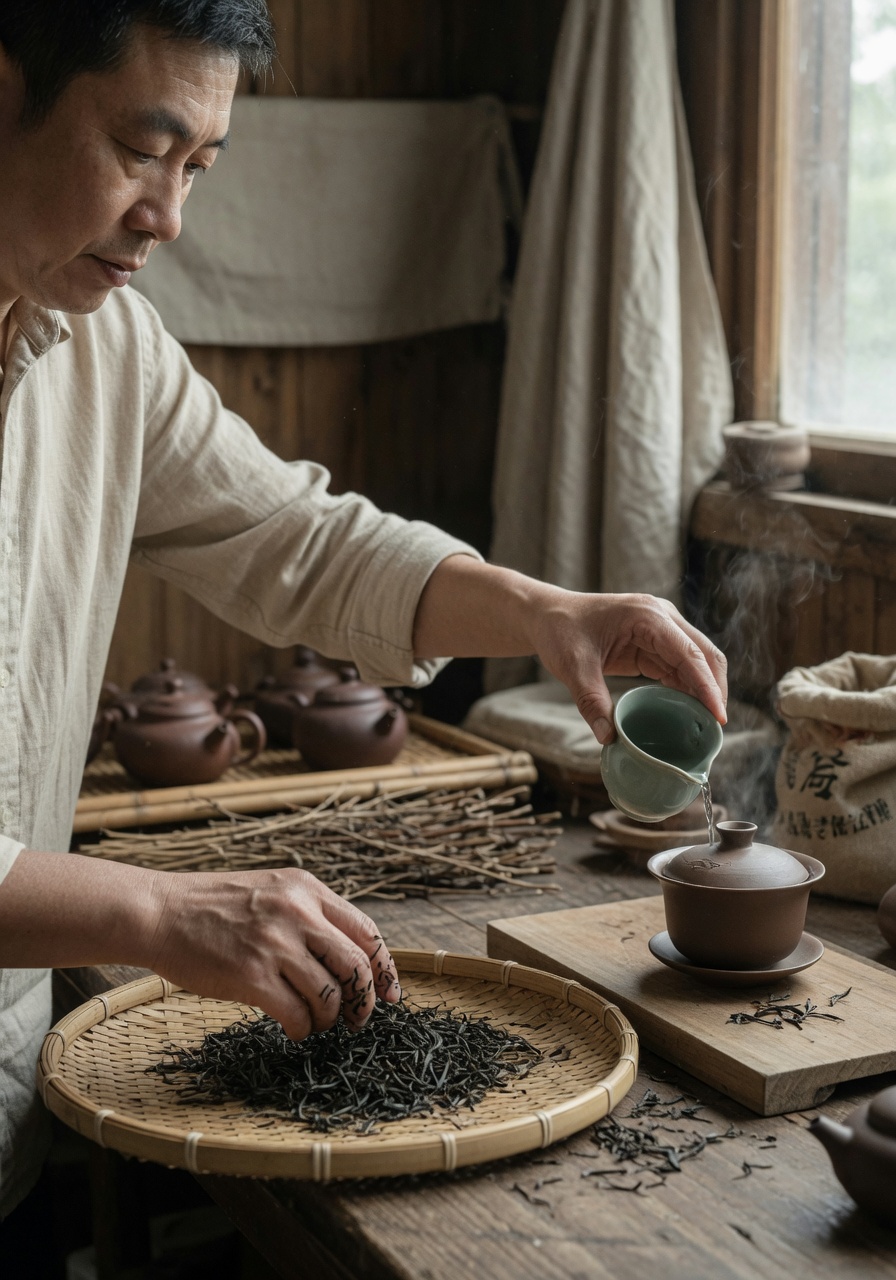
From cargo manifests to kiln doors
Michael Zhan came to tea sideways. Before joining Teamotea as our Procurement & Sourcing Specialist for China, he spent six years in logistics — moving containers of agricultural goods between Kunming, Xiamen and Rotterdam. The pivot happened in 2017 on a delayed shipment in Fuding, when a co-op manager pulled him into a back room, brewed a 2012 bái mǔ dān (白牡丹), and explained which of the four cakes on the table had been pressed too wet. Michael could taste the difference. He stayed three more days. He never went back to logistics.
He joined Teamotea the following year, initially to audit our Yunnan supply chain. The role expanded quickly. Today his work covers four overlapping disciplines — sourcing, field procurement, vendor visits, and lot selection — and his calendar is built around harvest windows rather than business quarters. March through early May he is in northern Fujian and the Wǔyí cliffs, then Yixing for kiln visits, then south to Yunnan for the first flush of large-leaf material in Lincang and Menghai. Autumn brings him back to Yixing for the second firing season, when most of the zhū ní (朱泥) and zǐ ní (紫泥) pots he selects for tea.equipment come out of their saggers.
His mentors are mostly potters, not tea masters. The first was Master Gu in Dīngshū town, who let Michael sit through three full firings before agreeing to sell him a single pot. Master Gu’s standard — that a pot must pour cleanly with the lid held down by one finger, ring clearly when struck with the lid knob, and seal so well that a thumb on the spout will hold the lid in place when inverted — is still the test Michael runs on every Yixing piece before it reaches our warehouse. Roughly one in five passes.
On the tea side, Michael works closely with our senior experts. Lot decisions on Yunnan material go through Fang Ting; Fujian whites are cross-checked with Chen Hui Yi; anything we ship as a paired set (pot plus tea) gets tasted by Zhou Xiang for compatibility. Michael’s own signature is not a tea but a method: every lot he buys arrives with a one-page field report — village, elevation, maker, weather notes, and the price he paid before negotiation. These reports become the lot stories you read on PDPs and the longer field dispatches we publish on tea.travel.
He is precise about what he is not. He is not a tea master, not a ceremony teacher, not a clay chemist. He is the person who shows up at the kiln on the day of unloading, who knows which co-op clerk actually grades the leaf and which one only stamps the paperwork, and who will walk away from a beautiful pot if the lid sits a hair off centre. That is the entire job.
Dīngshū town and the two clay seams that matter
Michael’s Yixing work centres on Dīngshū (丁蜀镇), the pottery town south of Wuxi where almost every serious zǐshā (紫砂) pot in the world is still made. The town itself is unromantic — low workshops, kiln chimneys, scooter traffic — but the geography matters. The clay seams Michael buys from sit in Huánglóngshān (黄龙山) and the smaller Zhàozhuāng deposit nearby. Huánglóngshān ore is largely closed to new mining now, so most workshops draw from aged stockpiles weathered in open pits for five to fifteen years before milling.
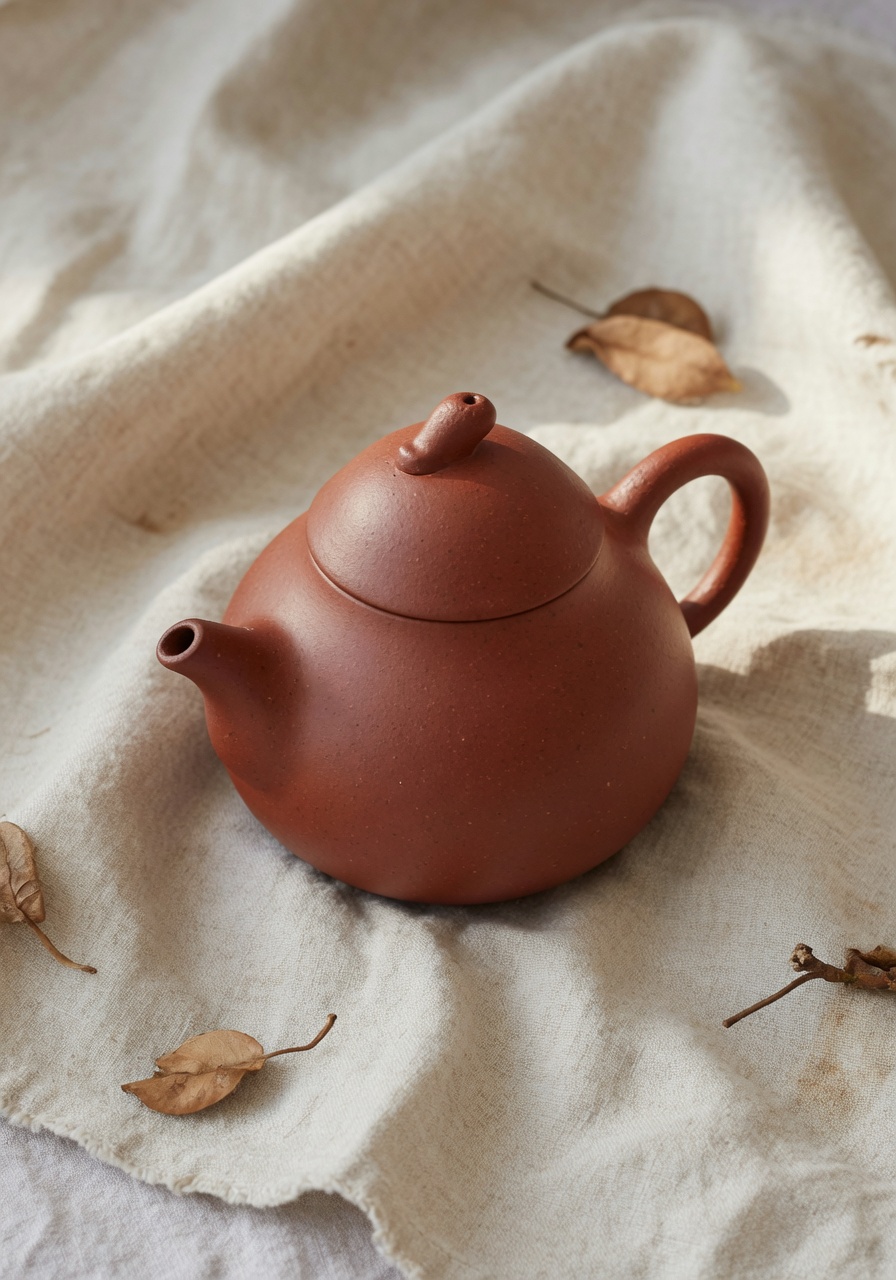
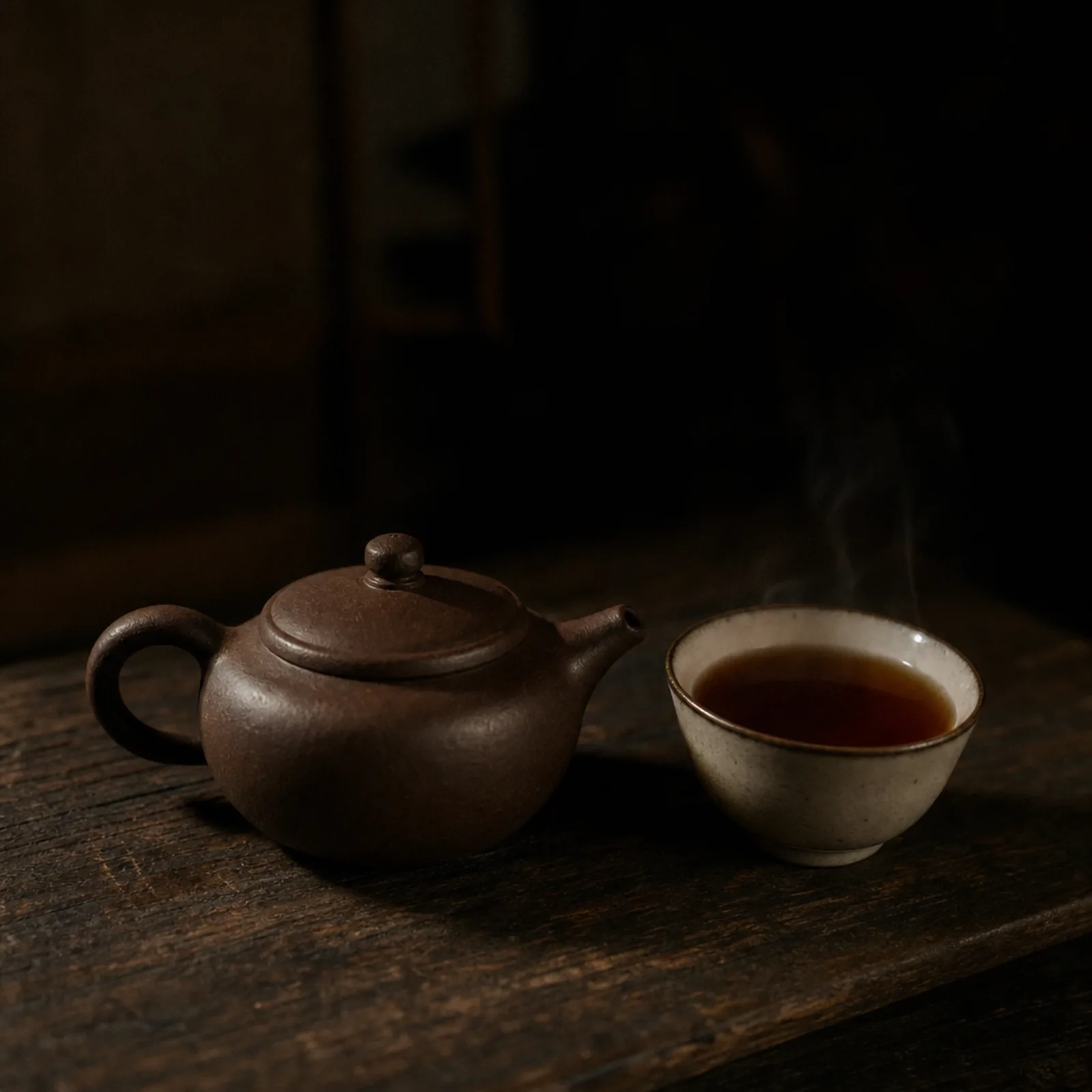
The two materials we focus on are zhū ní — high-iron, fine-grained, shrinks roughly 25% in the kiln and rings almost like porcelain — and zǐ ní, the broader purple-clay family with more tooth and a softer pour. Zhū ní favours rolled, sweeter leaf: Fujian yán chá (岩茶), aged whites, Phoenix oolongs. Zǐ ní is more forgiving and pairs naturally with shou pǔ’ěr (普洱) and aged sheng. Michael will not sell a pot without telling you which tea family it was made for. A mis-paired pot is a wasted pot.
His vendor list in Dīngshū is short — four full-time potters and two studios — and he visits each at least twice a year. The pear-shaped 100ml zhū ní currently listed on tea.equipment came from the third firing of a single 18kg ore batch, which yielded fourteen finished pots. We took eight. The rest stayed with the maker.