tea.equipment · sampling channel Encyclopedia · School · Atlas · Pu-erh · Equipment EN · RU · · · FR · ES · AR
tea.equipment Cart (0)
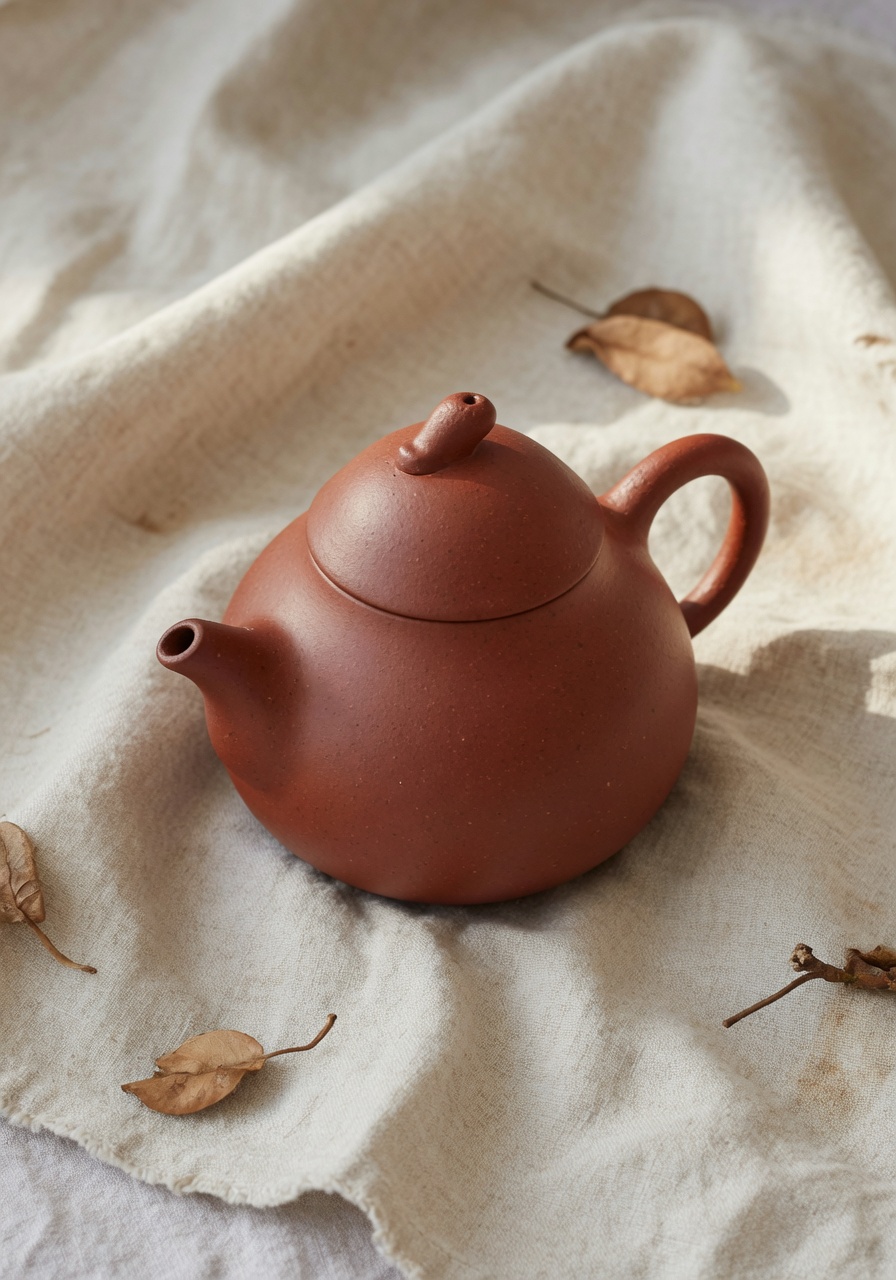
Dingshu zhuni pear, 100ml
dry
wet
liquor
plantation

home · yixing-teapots

Yixing teapots — zhuni

Dingshu zhuni pear, 100ml

Dīng Shǔ · Zhū Ní

丁蜀 · 朱泥

A small pear-shape pot in bright zhuni clay, thrown in Dingshu and tuned for the narrow band where high-fire oolong sings.

$260USD · 165 g

Weight
165 g
Harvest
Winter 2025 firing
Cultivar
Zhuni clay, Zhao Zhuang seam
Processing
Hand-thrown, single firing at roughly 1080°C, three-point lid fit, single-hole spout
Sourced by

Dingshu, a courtyard behind the clay market

Dingshu is the working half of Yixing — a town of kilns, clay yards, and small family studios south of the lake. Michael Zhan visits each quarter on the Jiangsu leg of his sourcing route, usually after the Fujian oolong harvest is locked in and before the spring puerh pressings begin.

This pot came from a two-person workshop a few streets behind the main clay market. The maker — a second-generation potter who asked we not publish her name on the product page — works only in zhuni, and only in the smaller volumes (80 to 140ml) that suit gongfu sessions for one or two drinkers. Her clay is from the Zhao Zhuang seam, weathered outdoors for four years before throwing.

Michael selected this lot of twelve pots from a firing of nineteen. Three cracked in the kiln, two had lid fits he wasn’t satisfied with, and two were held back by the maker for her own customers. The remaining twelve all share the same characteristics — three-point lid, single-hole spout, a pour that finishes cleanly without dribble, and a base that rings bright when tapped.

We price these at what they cost us plus our standard margin. There is no markup for the workshop name because we don’t publish it. What you’re paying for is the clay, the firing, and Michael’s hour spent at the bench checking each pot with water before it went into the case for Shanghai.

The leaf, brewed

How the pot tastes the tea

dry leaf

Empty pot smells faintly of warm river-stone — a clean mineral note, no kiln smoke, no off-gas.

wet leaf

After a hot rinse the clay darkens to oxblood; a soft toasted-grain aroma rises from the inner wall.

liquor

Pours a clear amber stream — viscous, beading on the lip rather than sheeting.

aroma

Lifts roasted oolong aromatics — almond skin, dried osmanthus, a thread of charcoal — without muting them.

taste

Rounds sharp edges off high-fire *yán chá* — the mid-palate gains weight, tannins settle, sweetness comes forward by the third steep.

finish

Long mineral finish with a clean *huígān* — the pot empties fully, no pooling at the base.

Brewing

A method, not a recipe.

Method
gongfu
Ratio
1:15 (about 6.5g leaf for the 100ml volume)
Water temp
100°C
First infusion
10s after a 5s rinse
Subsequent
8-10 steeps, adding 3-5s each from the fourth onward

Dedicate this pot to one tea family — roasted Wuyi or aged dancong. Pre-warm twice; zhuni loses heat faster than zisha.

Sourced by

Michael Zhan

Procurement & Sourcing Specialist (China)

Full profile →