Why one mountain in Jiangsu shaped every gongfu table
Yixing sits on Lake Tai in southern Jiangsu, and its hills carry a clay no other region holds in the same proportion. The local term is zǐshā (紫砂) — purple sand — but the family includes the iron-rich red of zhū ní, the structural purple of zǐ ní, and the pale, sandy duàn ní. The ore is dug, weathered for years under open sky, milled, screened, aged again as wet clay, then thrown or hand-paddled into shape using wooden tools that have not changed since the Ming.
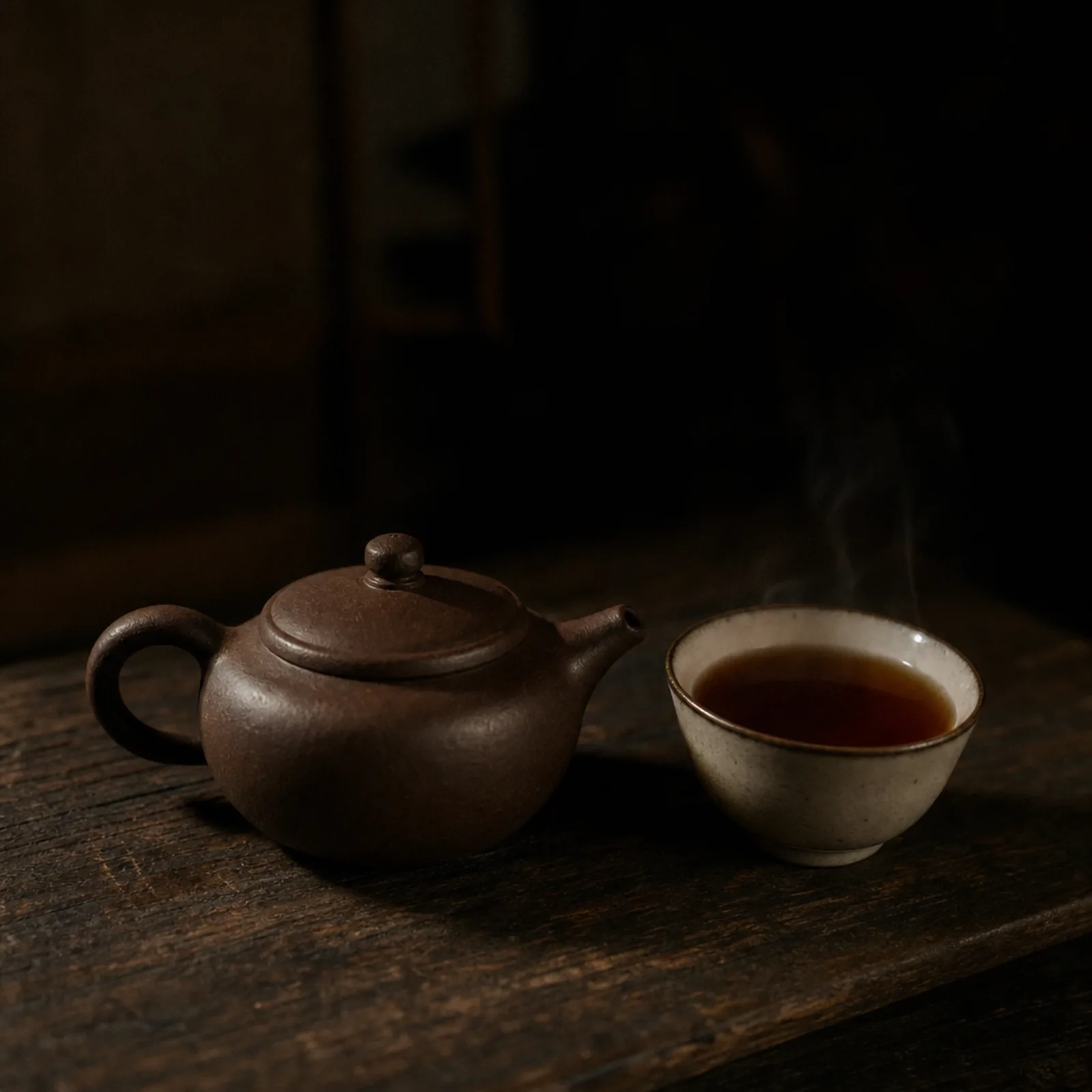
What makes the clay matter is its open pore structure. After a single firing in the 1150–1200°C range, the wall stays slightly porous — porous enough to soften the high notes of a tea, hold a memory of its aroma, and return that memory across years of use. This is why a Yixing pot is brewed with one tea family only: a shou pu-erh pot for shou, a yán chá pot for Wuyi rock oolong, a zhū ní pot reserved for Mí Lán Xiāng (蜜兰香) dancong.
There is no picking season — the season is the mining season, and the named ores from Huánglóngshān (黄龙山) have been protected since 2005, which is why provenance and maker signature now matter as much as shape. A real Yixing pot carries three stamps: under the lid, under the handle, and on the base. The base names the artist; the lid names the studio or commission.
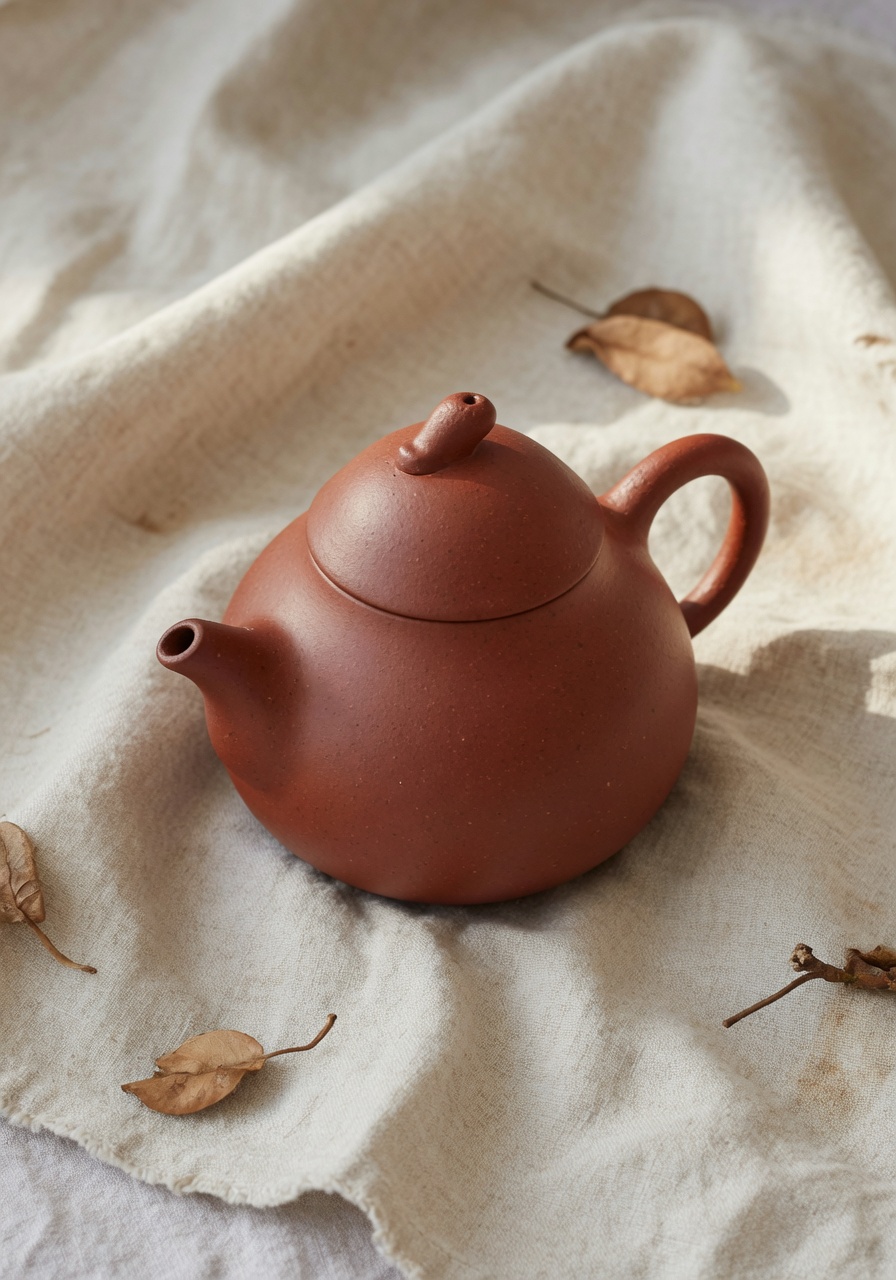
Sensory contribution is subtle but real. Zhū ní is dense and high-fired, with a bright bell-tone when the lid is tapped — it favors aromatic oolongs and young shēng. Zǐ ní is more neutral and forgiving, the everyday workhorse. Duàn ní breathes more freely, which suits aged shou and liù bǎo.
For the deep history of the clay and a kiln-by-kiln map, see our guide at tea.equipment/guide/yixing and the encyclopedia entry on thetea.app.
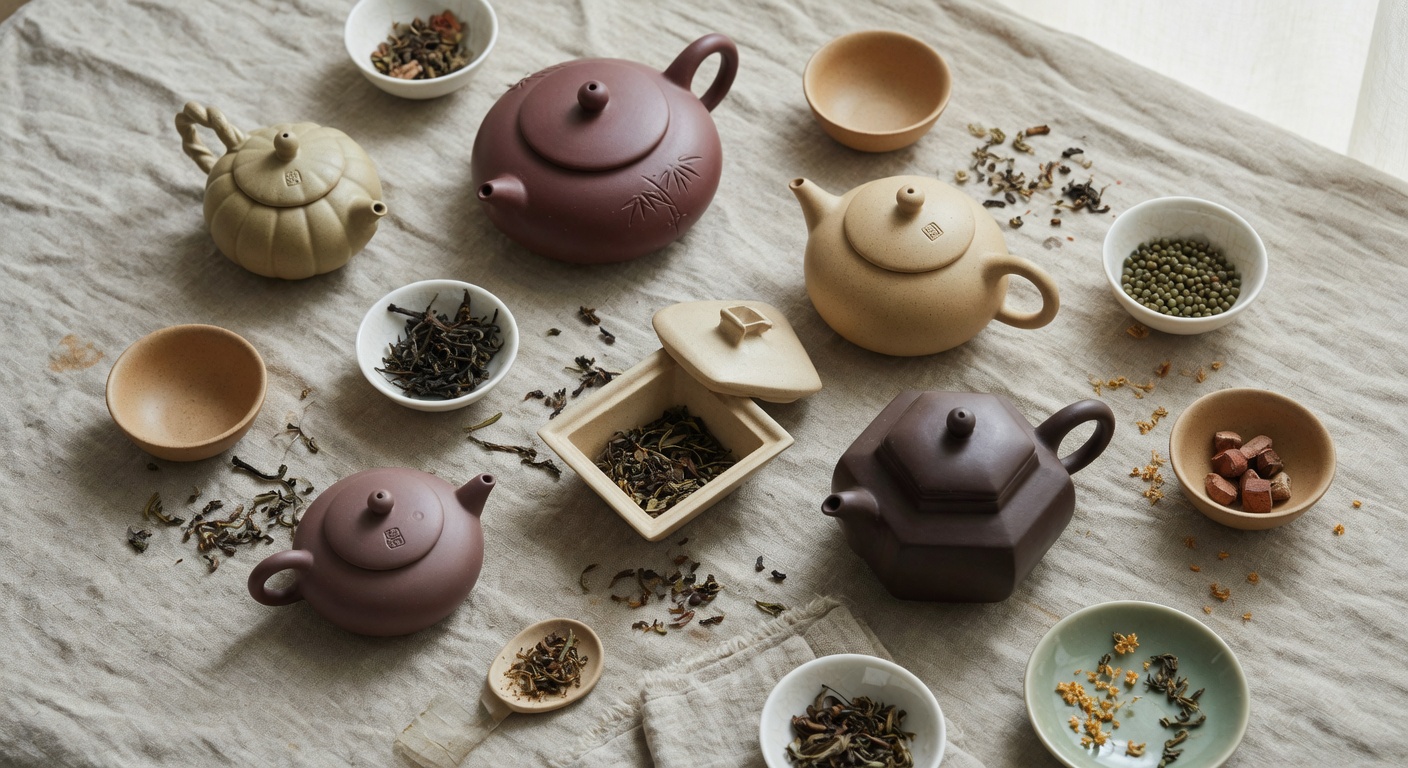
This season’s pots, from named makers
Each piece below is thrown by a working artisan in Dīngshū, signed, and shipped with a clay-origin certificate from the studio.