From tasting tables to the supply chain
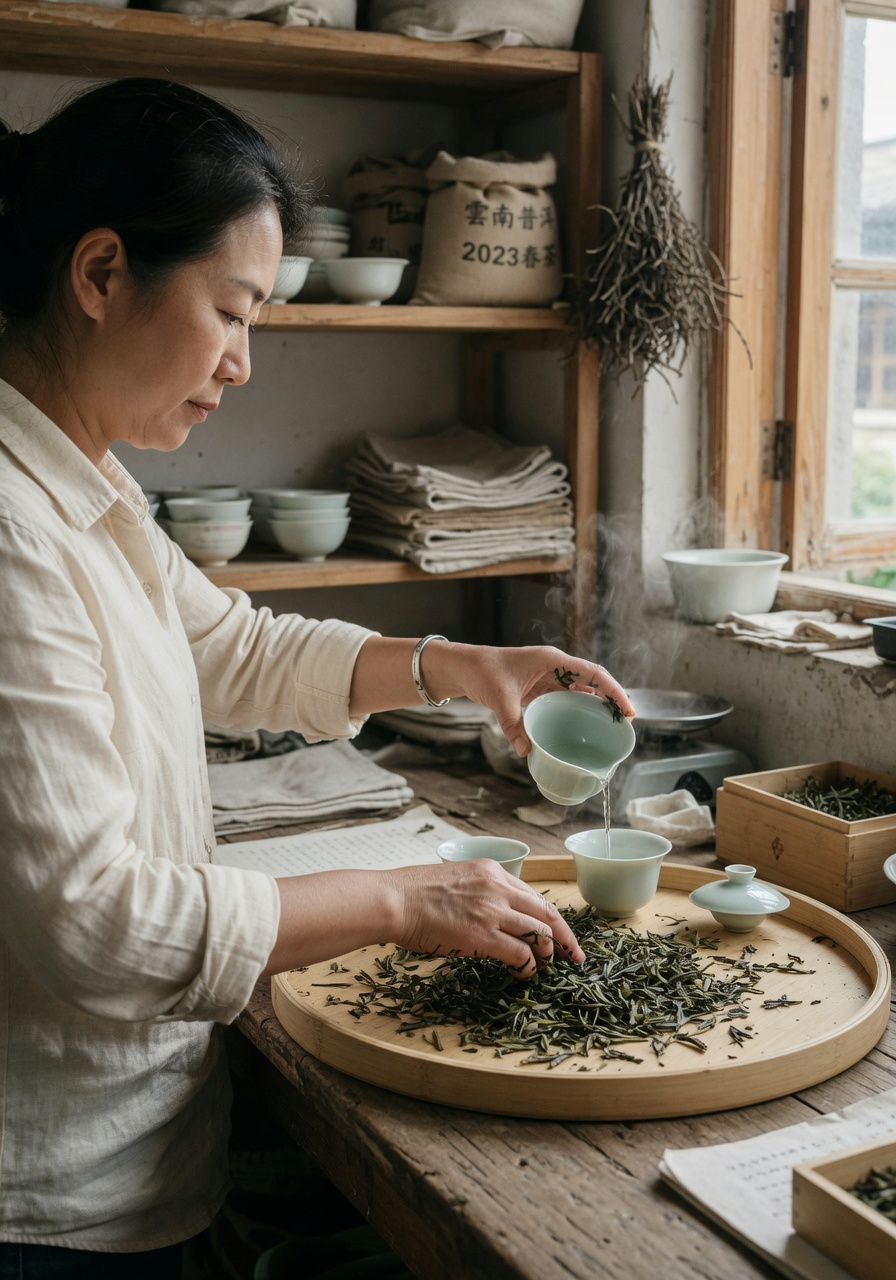
Sandry Law leads procurement for Teamotea across mainland China, which in practice means she spends about half the year on trains, the other half in workshops with a thermometer, a loupe, and a notebook that is mostly waterproof. Her title — Head of Procurement (China) — sounds corporate, but the work is closer to that of a working buyer in the old caravan sense: walk the floor, taste the run, weigh the claim, sign the lot.
She came into tea sideways. Trained originally in industrial quality control in Guangzhou, she joined a small Yunnan trading house in her late twenties because, as she puts it, she wanted to audit something that smelled good. The first two seasons were a crash course in Mao Cha (毛茶) grading and in the practical difference between a press cake that travels and one that arrives broken. By the third spring she was running her own buying route between Kunming, Lincang, and the villages around Menghai, and she has not really stopped since.
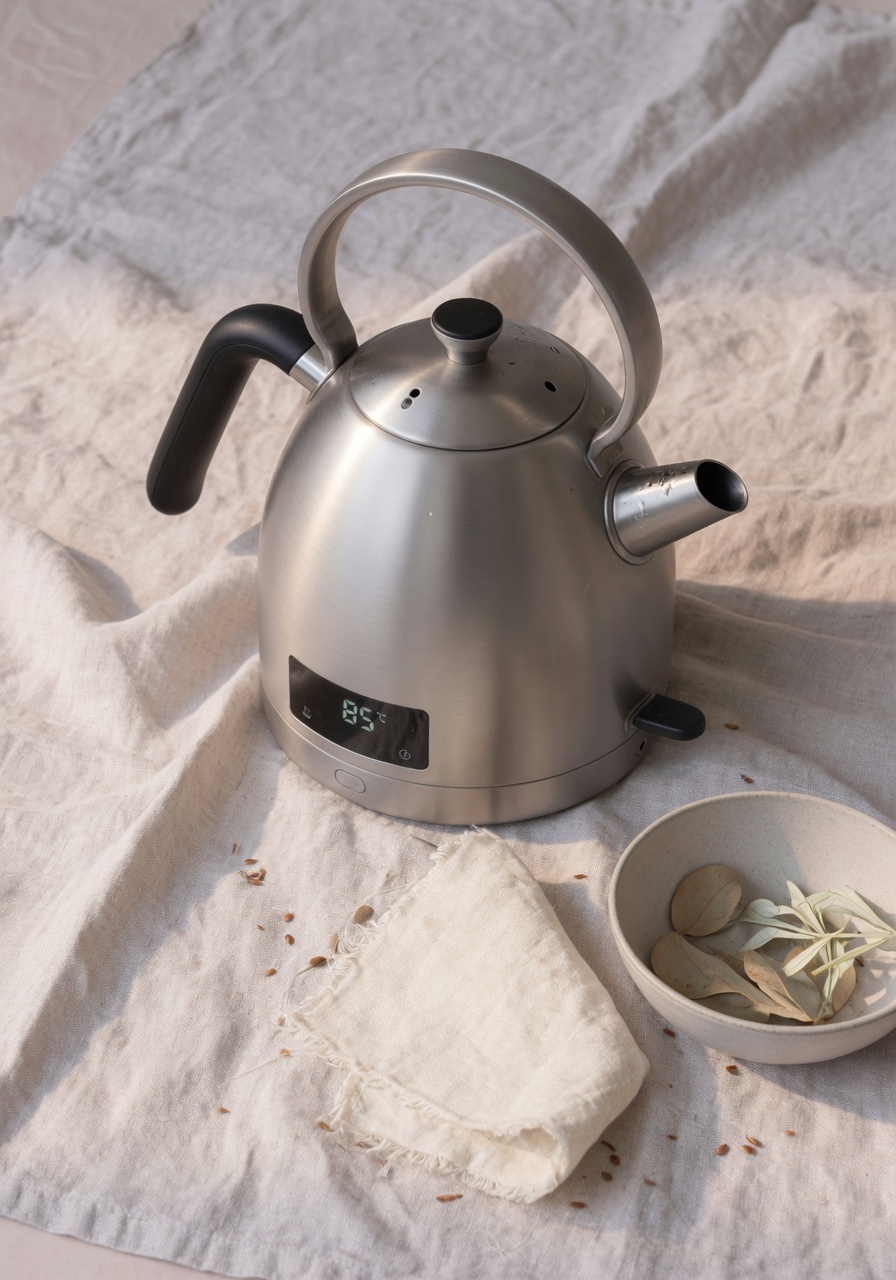
Her remit at tea.equipment is narrower than her tea-buying work and, in some ways, harder. Kettles, scales, timers, brewing trays — these are the tools every editor in the constellation uses to write honestly about what is in the cup. If a variable kettle drifts two degrees, a tasting note drifts with it. So Sandry treats equipment vendors the way she treats tea producers: visit the bench, watch the assembly, ask what fails first. The variable-temperature kettle she signed off on for the shop went through eleven months of bench testing in three studios before it earned a slot.
Her mentors are mostly procurement people, not tea masters. She names two often — a retired buyer from a state-owned export company in Kunming who taught her how to read a contract written by someone who hopes you will not read it, and a German lab-equipment importer in Shanghai who taught her to ask for calibration certificates even when the supplier laughs. Both lessons show up in her work for the constellation: vendor agreements that name specific tolerances, and a quiet rule that every scale shipped to a customer has been spot-checked against a reference weight in her Kunming office.
She collaborates closely with the constellation’s regional tea experts — Zhou Xiang on Hunan greens and blacks, Chen Hui Yi on Guangdong whites, Fang Ting on Henan oolongs and pu-erh — because the equipment a tea needs is downstream of the tea itself. A Yín Zhēn (银针) needs different water behaviour than a roasted Shuǐ Xiān (水仙), and the kettles in the catalog reflect that.
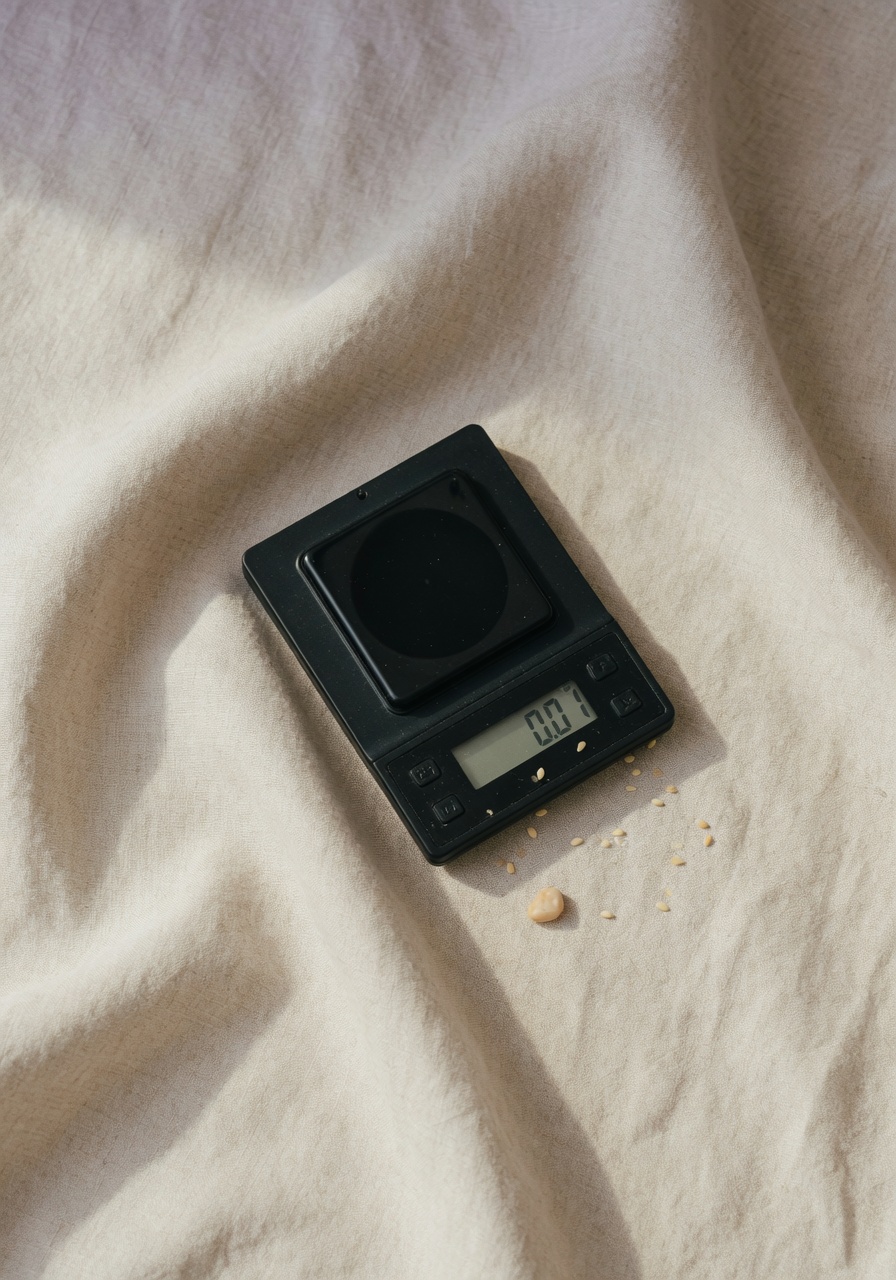
What she has no patience for: marketing claims with no test bench behind them, suppliers who change a component silently between production runs, and the word artisanal applied to mass-produced ware. What she will defend at length: well-made factory goods, honest specifications, and the idea that a 0.01g scale is not luxury but basic hygiene for anyone serious about gongfu brewing.
Kunming as a procurement hub
Sandry works out of a small office in northern Kunming, walking distance from the Xiongda tea market and a short drive from the freight yards that move most of Yunnan’s tea and a surprising amount of its tea-related hardware. Kunming is not a manufacturing city in the way Yiwu or Foshan are, but it is the natural funnel: kettles assembled in Guangdong, ceramics fired in Jingdezhen, bamboo trays cut in Sichuan all pass through Kunming warehouses on their way to buyers across the southwest.
That geography shapes her workflow. Twice a month she runs a route south — Pu’er, Menghai, Jinghong — checking on tea-producer partners and, increasingly, on the small workshops that have started making brewing ware for the local market. Once a quarter she flies east to inspect the factories that produce our kettles and scales, usually in Foshan or Zhongshan. The Kunming office is where samples come to be unboxed, weighed, tested against reference equipment, and either signed off or sent back.
The altitude matters more than people expect. Kunming sits at roughly 1,900 metres, which means water boils at about 93°C rather than 100°C. Every variable-temperature kettle in the catalog is calibrated against that reality in her office before it is calibrated again at sea level for export. Customers in Shanghai or Hamburg will never notice, but the test bench in Kunming is part of why the numbers on the kettle display can be trusted.
For the deeper Yunnan story — the terroir, the gardens, the ancient-tree forests — see the Yunnan atlas entry on tea.travel.