tea.equipment · sampling channel Encyclopedia · School · Atlas · Pu-erh · Equipment EN · RU · · · FR · ES · AR
tea.equipment Cart (0)

home · catalog

宜興茶壺

Zǐshā 泥,出自具名之手

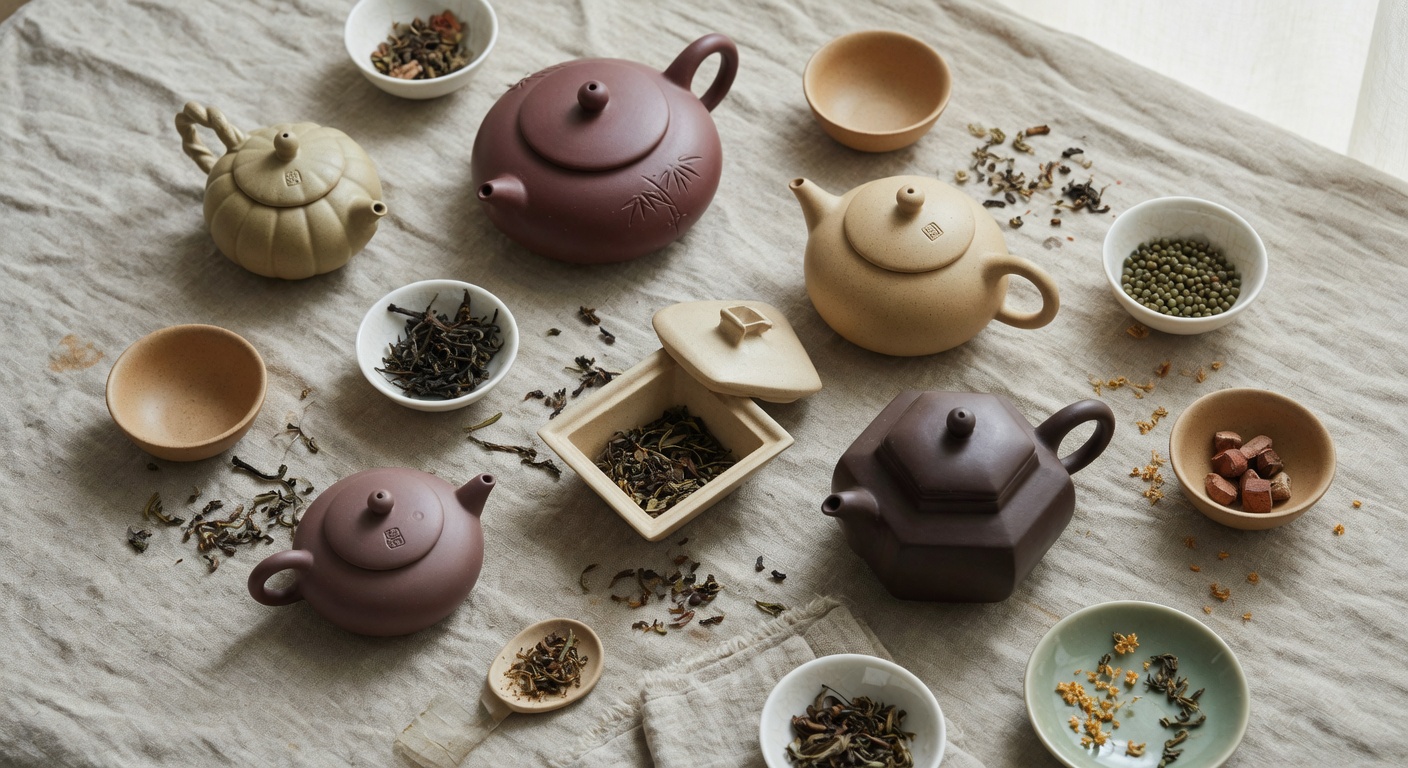
來自江蘇丁蜀鎮的窯爐,產出在功夫茶世界中最受鑽研的茶壺。每把 *Yí Xīng*(宜興)壺皆由單一礦石手捏成形—— *zhū ní*、*zǐ ní* 或 *duàn ní* ——並由塑造它的匠人簽名。

宜興茶壺

為何江蘇的一座山,影響了每一張功夫茶桌

宜興坐落於江蘇南部的太湖之濱,其山丘蘊藏著其他地區無可比擬比例的黏土。當地稱之為 zǐshā(紫砂)—— purple sand —— 但此陶土家族包含了富鐵的紅色 zhū ní、結構性的紫色 zǐ ní,以及蒼白帶砂的 duàn ní。礦石經挖掘、露天風化數年、研磨、篩選,再以濕泥形態陳化,之後用手拉坯或以木拍成形,所用木工具自明代以來未曾改變。

讓黏土獨具意義的,是其開放的孔隙結構。在1150–1200°C 範圍內一次窯燒後,壺壁保有輕微的孔隙——足以柔化茶湯的高昂調性,留存其香氣的記憶,並在多年使用中回饋這些記憶。這正是為何一把宜興壺只用以沖泡單一茶類:shou pu-erh 壺專屬 shouyán chá 壺用於武夷岩烏龍,而 zhū ní 壺則留給 Mí Lán Xiāng(蜜兰香)單欉。

這裡沒有採摘季——季節就是開採季,而來自 Huánglóngshān(黄龙山)的指名礦石自2005年起便受到保護,這說明了為何產地與匠人落款如今與壺形同等重要。一把真正的宜興壺帶有三處落款:壺蓋內、壺把下,以及壺底。壺底標示製壺師之名;壺蓋則標明工作室或委託出處。

感官上的貢獻微妙卻真實。Zhū ní 質地密實、高溫燒成,輕敲壺蓋時會發出清脆的鐘鳴聲——它適合香氣型的烏龍茶與年輕的 shēngZǐ ní 較為中性且容錯度高,是日常使用的主力。Duàn ní 透氣性更佳,適合陳年 shouliù bǎo

想深入了解黏土的深層歷史與逐窯地圖,請參閱我們在 tea.equipment/guide/yixing 的指南,以及 thetea.app 上的百科條目。

本季壺作,出自具名匠人

以下每件作品皆由丁蜀鎮的現役製壺師手捏、簽名,並隨附工作室的黏土產地證書出貨。

A buyer's note

Before you commit a pot to one tea

依茶類擇泥

Use *zhū ní* for aromatic oolong and dancong, *zǐ ní* for hong cha and aged sheng, *duàn ní* for shou and dark teas. One pot, one family.

以茶席規模定壺,不以空間為據

Gongfu pours run 80–150ml. A 100ml pot serves two to three drinkers at five infusions. Larger pots dilute leaf-to-water ratios and dull the brew.

首次使用前先開壺

Simmer in clean water with a pinch of the tea you'll dedicate it to, 30 minutes, then air-dry on a cloth for a day. See our care checklist on the PDP.

核對三個落款

Base, under-handle, under-lid. A pot with only one stamp is usually factory work. Named-maker pots carry all three and a studio receipt.

傾聽壺蓋之音

A well-fired pot rings clearly when the lid is tapped against the spout. A dull thud usually means low firing or hidden cracks.

切勿使用肥皂

Rinse with hot water only, wipe with a cotton cloth, store with the lid off. Soap kills the patina that takes years to build.

Common questions

Asked, answered.

Why dedicate one pot to one tea?

Yixing clay is porous and absorbs aromatic compounds. Mixing tea families muddles future brews. One pot, one family, for clarity across years.

Is a 100ml pot too small?

For gongfu it is ideal. A 100ml pot at 1:15 leaf ratio serves two drinkers across six to eight short infusions, which is the standard session length.

How do I know the clay is real Huánglóngshān ore?

Ask for the studio's clay-source certificate and the maker's signature stamps. Our PDPs include both, photographed under raking light.

Can I use a Yixing pot for green tea?

We do not recommend it. Green tea needs glass or porcelain to keep brewing temperature low. For green, see our gaiwan category or [tea.glass](https://tea.glass).

How long until the pot develops patina?

With daily use, visible *bāojiāng* (包浆) sheen appears after six to nine months. Full depth takes three to five years of dedicated brewing.

Do I need to season every new pot?

Yes. A short simmer with clean water and a pinch of the dedicated tea opens the pores and removes kiln residue. Full steps on the PDP care tab.

Where can I learn to brew properly with one?

Our gongfu fundamentals course at [tea.school](https://tea.school) covers pot pairing, pour rhythm, and ratio in four sessions with a live tutor.

Can I age tea inside the pot between sessions?

No. Rinse, drain, and store lid-off. Leaves left inside ferment and sour the clay. The pot only carries aroma, never wet leaf.