tea.equipment · sampling channel Encyclopedia · School · Atlas · Pu-erh · Equipment EN · RU · · · FR · ES · AR
tea.equipment Cart (0)

home · catalog

أباريق ييشينغ

Zǐshā صلصال يُشكّل يدويًا بأسماء صانعيه

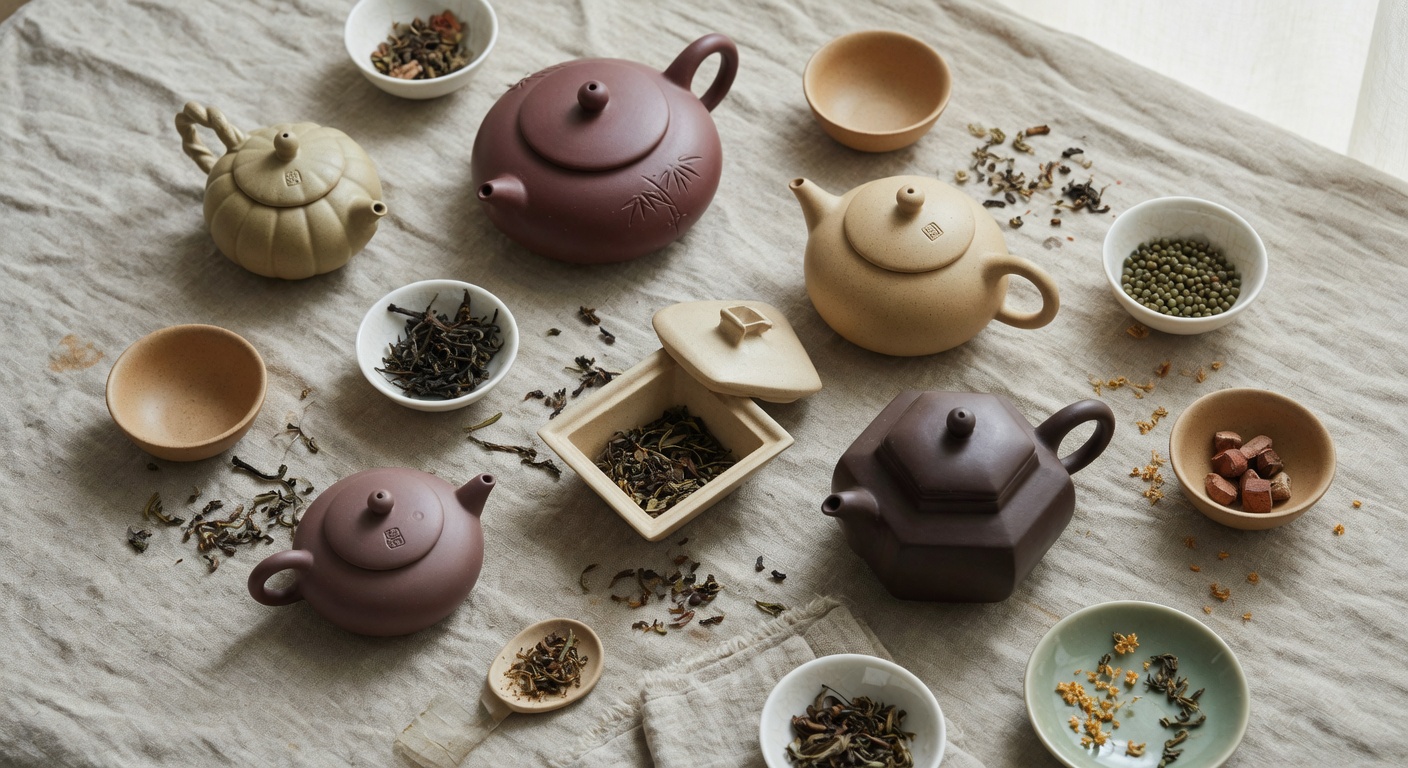
من أفران بلدة دينغشو في جيانغسو تأتي أكثر أباريق الشاي دراسةً في عالم الغونغفو. كل إبريق *Yí Xīng* (宜兴) يُشكّل يدويًا من خام واحد — *zhū ní*، أو *zǐ ní*، أو *duàn ní* — ويحمل توقيع الصانع الذي شكّله.

أباريق ييشينغ

لماذا شكّل جبل واحد في جيانغسو كل طاولة غونغفو

تقع ييشينغ على بحيرة تاي في جنوب جيانغسو، وتلالها تحمل صلصالًا لا تحويه أي منطقة أخرى بنفس النسبة. المصطلح المحلي هو zǐshā (紫砂) — الرمل الأرجواني — لكن العائلة تشمل الأحمر الغني بالحديد من zhū ní، والأرجواني الهيكلي من zǐ ní، والرملي الباهت duàn ní. يُستخرج الخام، ويُعَرَّض للتجوية لسنوات تحت السماء المفتوحة، ثم يُطحن، ويُنخل، ويُعتق مرة أخرى كطين رطب، ثم يُشكل بالرمي أو بالطرق اليدوي باستخدام أدوات خشبية لم تتغير منذ عهد مينغ.

ما يجعل الصلصال مهمًا هو هيكله ذو المسام المفتوحة. بعد حرق واحد في نطاق 1150–1200°م، يظل الجدار مساميًا قليلًا — مساميًا بما يكفي لتليين النغمات العالية للشاي، والاحتفاظ بذاكرة رائحته، وإعادة تلك الذاكرة عبر سنوات من الاستخدام. لهذا السبب يُستخدم إبريق ييشينغ مع عائلة شاي واحدة فقط: إبريق shou pu-erh لـshou، وإبريق yán chá لأولونغ صخور وويي، وإبريق zhū ní محجوز لـMí Lán Xiāng (蜜兰香) دانكونغ.

لا يوجد موسم قطف — الموسم هو موسم التعدين، وقد حُظِر خامات Huánglóngshān (黄龙山) المسماة منذ عام 2005، ولهذا أصبحت المنشأ وتوقيع الصانع مهمين بقدر الشكل. الإبريق الأصلي من ييشينغ يحمل ثلاثة أختام: تحت الغطاء، وتحت المقبض، وعلى القاعدة. القاعدة تسمي الفنان؛ والغطاء يسمي الاستوديو أو الطلب.

المساهمة الحسية طفيفة لكنها حقيقية. Zhū ní كثيف ومحروق على حرارة عالية، مع نغمة جرسية نقية عند النقر على الغطاء — يفضّل الأولونغات العطرية وshēng الصغير. Zǐ ní أكثر حيادية وتسامحًا، العمود الفقري اليومي. Duàn ní يتنفس بحرية أكبر، مما يناسب shou المعتّق وliù bǎo.

للحصول على التاريخ العميق للصلصال وخريطة فرن بفرن، راجع دليلنا على tea.equipment/guide/yixing والمدخل الموسوعي على thetea.app.

أباريق هذا الموسم، من صانعين موقّعين

كل قطعة أدناه مشكّلة يدويًا بواسطة حرفي عامل في دينغشو، موقّعة، وتُشحن مع شهادة منشأ الصلصال من الاستوديو.

Automated translation — native review pending.

A buyer's note

Before you commit a pot to one tea

ناسب الصلصال مع عائلة الشاي

Use *zhū ní* for aromatic oolong and dancong, *zǐ ní* for hong cha and aged sheng, *duàn ní* for shou and dark teas. One pot, one family.

حجّم للجلسة، لا للغرفة

Gongfu pours run 80–150ml. A 100ml pot serves two to three drinkers at five infusions. Larger pots dilute leaf-to-water ratios and dull the brew.

افتح الإبريق قبل الاستخدام الأول

Simmer in clean water with a pinch of the tea you'll dedicate it to, 30 minutes, then air-dry on a cloth for a day. See our care checklist on the PDP.

تحقّق من التوقيعات الثلاثة

Base, under-handle, under-lid. A pot with only one stamp is usually factory work. Named-maker pots carry all three and a studio receipt.

استمع إلى الغطاء

A well-fired pot rings clearly when the lid is tapped against the spout. A dull thud usually means low firing or hidden cracks.

لا تستخدم الصابون أبدًا

Rinse with hot water only, wipe with a cotton cloth, store with the lid off. Soap kills the patina that takes years to build.

Common questions

Asked, answered.

Why dedicate one pot to one tea?

Yixing clay is porous and absorbs aromatic compounds. Mixing tea families muddles future brews. One pot, one family, for clarity across years.

Is a 100ml pot too small?

For gongfu it is ideal. A 100ml pot at 1:15 leaf ratio serves two drinkers across six to eight short infusions, which is the standard session length.

How do I know the clay is real Huánglóngshān ore?

Ask for the studio's clay-source certificate and the maker's signature stamps. Our PDPs include both, photographed under raking light.

Can I use a Yixing pot for green tea?

We do not recommend it. Green tea needs glass or porcelain to keep brewing temperature low. For green, see our gaiwan category or [tea.glass](https://tea.glass).

How long until the pot develops patina?

With daily use, visible *bāojiāng* (包浆) sheen appears after six to nine months. Full depth takes three to five years of dedicated brewing.

Do I need to season every new pot?

Yes. A short simmer with clean water and a pinch of the dedicated tea opens the pores and removes kiln residue. Full steps on the PDP care tab.

Where can I learn to brew properly with one?

Our gongfu fundamentals course at [tea.school](https://tea.school) covers pot pairing, pour rhythm, and ratio in four sessions with a live tutor.

Can I age tea inside the pot between sessions?

No. Rinse, drain, and store lid-off. Leaves left inside ferment and sour the clay. The pot only carries aroma, never wet leaf.