One mountain in Jiangsu, and why it still matters
Yixing sits on Lake Tai in southern Jiangsu, and its hills hold a clay no other region carries in the same proportion — *zǐshā* (紫砂), purple sand. The ore is dug, weathered for years under open sky, milled, screened, aged again as wet clay, then thrown or hand-paddled with wooden tools that have not changed since the Ming. The named ore body at Huánglóngshān (黄龙山) has been protected from new mining since 2005, which is why most workshops now draw from stockpiles weathered five to fifteen years, and why provenance and maker signature matter as much as shape. There is no picking season for this material — the season is the mining season, decades ago.
Three clays, three temperaments
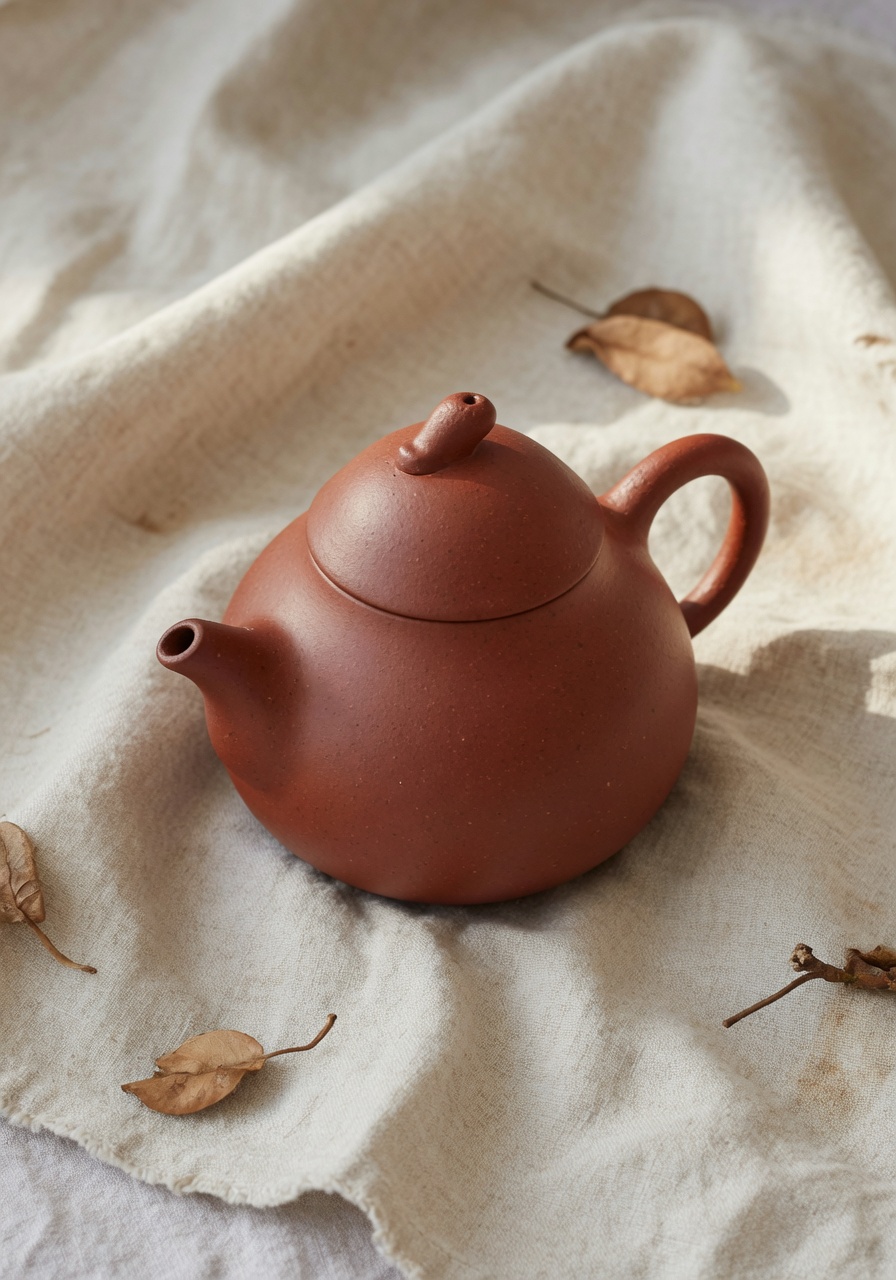
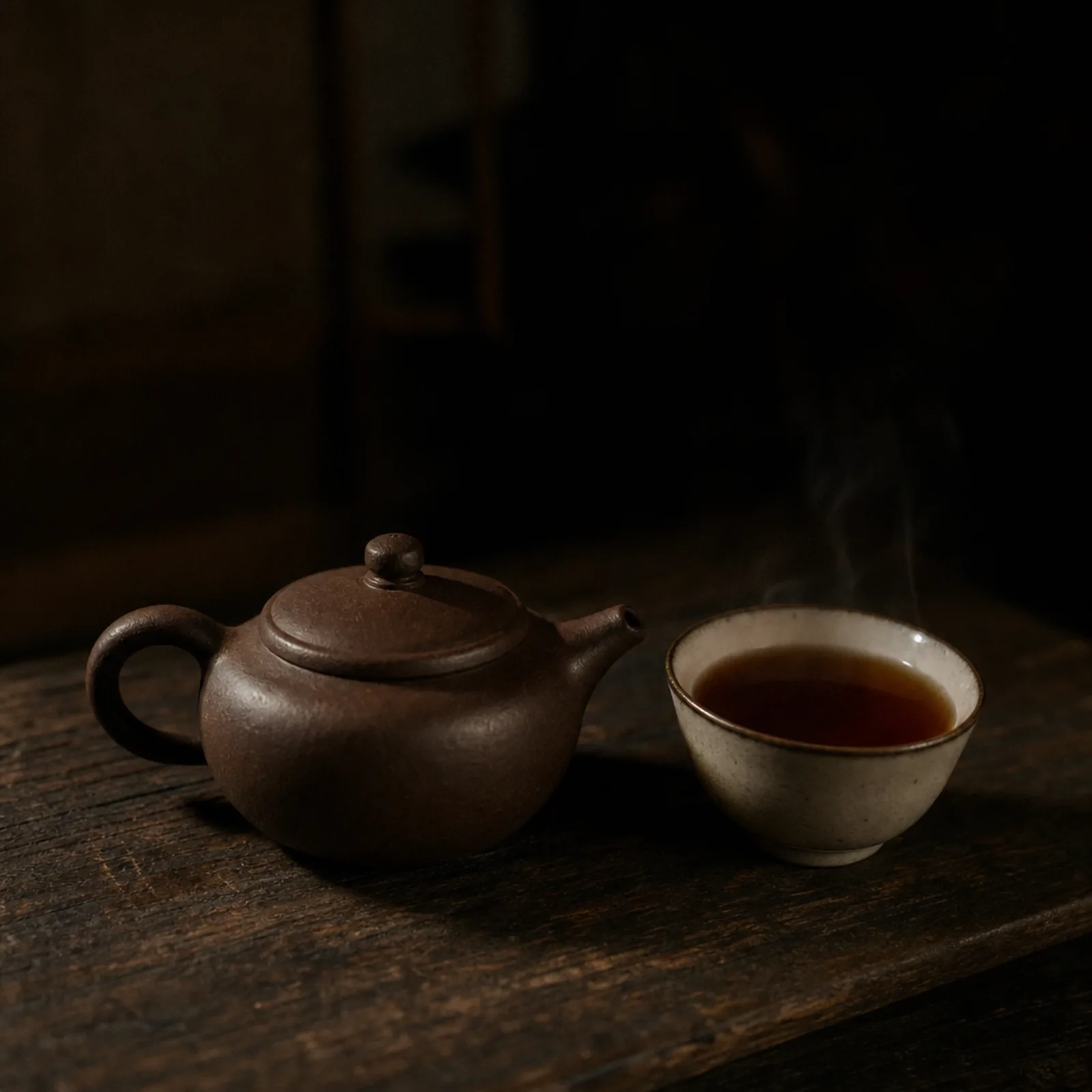
*Zhū ní* (朱泥) is high-iron and fine-grained, fired dense near 1200°C, and rings almost like porcelain when the lid is tapped. Its tight pore structure favours rolled, aromatic leaf — dancong, high-fire Wuyi oolong, young *shēng*. *Zǐ ní* (紫泥) is the broader purple-clay family — more tooth, a softer pour, more forgiving — and pairs naturally with *hóng chá* and aged sheng. *Duàn ní* (段泥) breathes more freely than either, a looser and sandier structure that suits the heavier, earthier register of *shou pǔ'ěr* and other dark teas without turning muddy. One pot, one clay, one tea family — the porosity that makes Yixing worth using is the same porosity that carries a memory of whatever it last brewed.
Reading the three stamps
A real Yixing pot carries three stamps — under the lid, under the handle, and on the base. The base names the artist; the lid names the studio or commission. A pot with only one stamp, or none, is usually factory or slip-cast work, which is not dishonest in itself but should be sold as what it is. Ask for the studio's clay-source certificate alongside the stamps if you want the full chain back to the ore.
Seasoning a new pot
Simmer the new pot in clean water with a pinch of the tea you intend to dedicate it to, for around 30 minutes, then air-dry on a cotton cloth for a day. Repeat the pour-and-rinse for the first two or three sessions, pouring the liquor over the outside of the pot as well as drinking it — this is what raises the first visible sheen. With daily use, a visible *bāojiāng* (包浆) patina appears after six to nine months; full depth takes three to five years of dedicated brewing.
Daily care and what shortens a pot's life
Rinse with hot water only — never soap, which strips the patina a Yixing pot spends years building. Wipe with a cotton cloth and store with the lid off; leaves left inside between sessions ferment and sour the clay. A well-fired pot rings clearly when the lid is tapped against the spout — a dull thud usually means low firing or a hidden crack, worth checking before you commit a tea to the pot permanently.