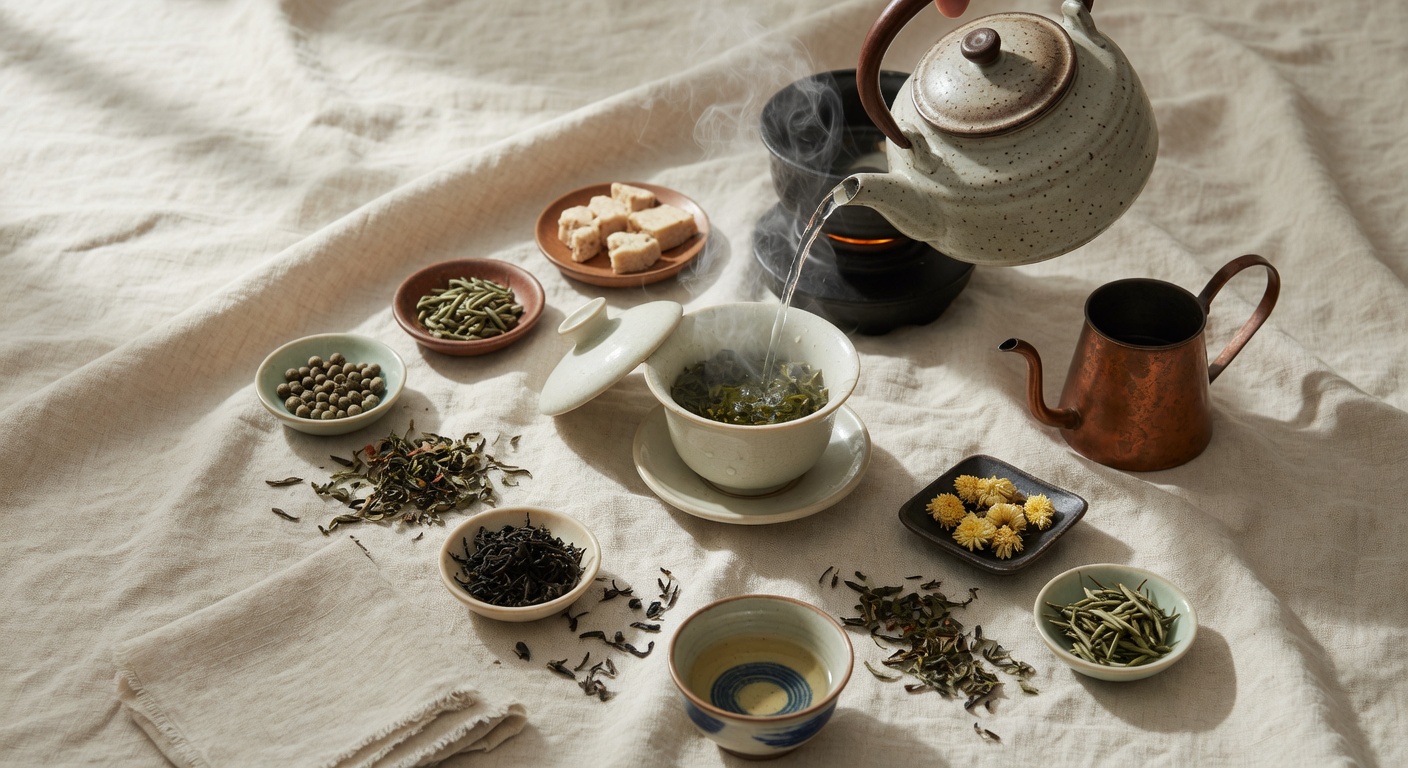
Do I really need a variable-temperature kettle?
If you drink anything other than black tea and dark pu-erh, yes. Greens, whites, yellows, and light oolongs are temperature-sensitive in ways a boil-only kettle can't serve.
Is glass or stainless better?
Both are neutral. Glass shows you the boil and any sediment from your water. Stainless is more durable and quieter. Pick on aesthetics — performance is similar.
What about plastic parts?
Avoid kettles where water touches plastic at temperature. Plastic on the handle or base is fine. Plastic in the spout or chamber is a hard no for us.
How accurate is 'variable temperature' really?
Good kettles hold ±1°C. Cheaper ones drift ±5°C, which matters for a 75°C white tea. We test every model with a calibrated probe before listing.
Can I use a stovetop kettle on induction?
Only if its base is ferromagnetic. Most cast iron *tiě hú* work on induction; pure clay does not. Check the product page — we list compatibility for each item.
Does the kettle change the taste of water?
Stainless and glass are neutral. Cast iron releases trace iron that sweetens dark teas. Clay can soften hard water slightly. The effect is real but subtle.
What water should I put in the kettle?
Soft spring water, 30-90 ppm TDS, is the sweet spot for most teas. Filtered tap is fine if your area is soft. See the water module at tea.school for specifics.
How does this pair with the rest of my setup?
Pair with a gaiwan or *zǐshā* (紫砂) teapot from our teapots category, and a fairness pitcher sized to your kettle's pour.