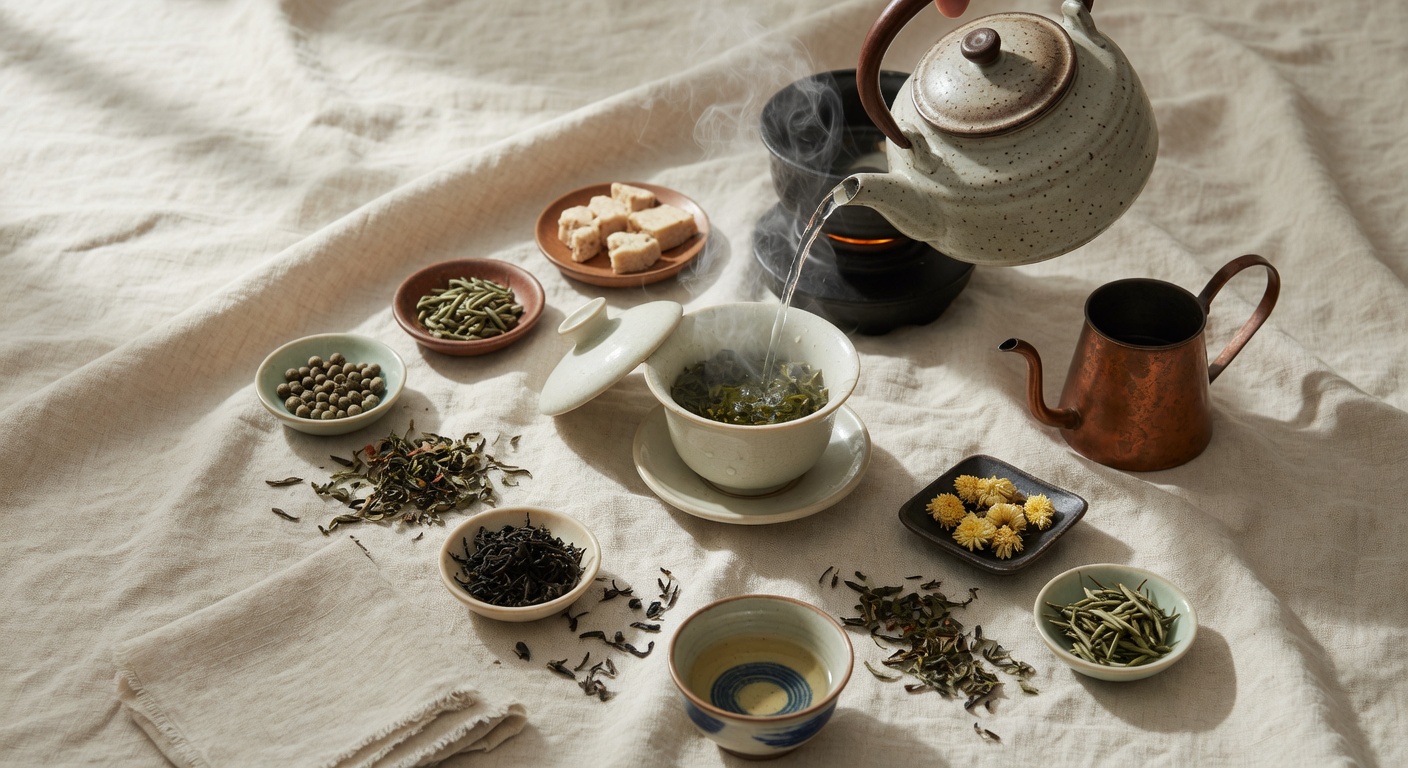
tea.equipment · sampling channel Encyclopedia · School · Atlas · Pu-erh · Equipment EN · RU · · · FR · ES · AR
tea.equipment Cart (0)

home · catalog

Heat & water

Kettles tuned for the temperatures tea actually wants

A kettle is the quiet half of every brew. The leaf gets the credit, but it's the water — its temperature, its movement, the speed it arrives at boil — that decides whether a green tea reads sweet or astringent, whether a *yán chá* (岩茶) opens or closes. This category gathers electric and stovetop kettles built around tea, not coffee.

Heat & water

Why tea people obsess over kettles

Coffee lives at a single temperature. Tea does not. A silver-needle white asks for water around 75°C — pushed higher, the down on the bud cooks and the cup turns flat. A roasted Wuyi oolong wants a hard, rolling boil to lift its char into aroma. A young shēng pu-erh sits somewhere in between, and an aged shóu asks for the highest, most aggressive water you can give it. One leaf, one temperature is the rule the kettle has to serve.

This is why a tea kettle is built differently than a coffee gooseneck. The priorities, in order: accurate variable temperature, a hold function so the second steep starts at the same heat as the first, low noise so the kettle disappears under conversation, a pour that’s controllable without being theatrical, and materials that don’t bleed into the water. Glass shows you what’s happening. Stainless is honest and quiet. Cast iron and clay belong on a stovetop, on charcoal or induction, where the slow climb to boil is part of the ritual.

The water itself matters as much as the kettle. Soft water with low TDS lets aroma compounds bloom; hard water flattens green teas and dulls light oolongs. If your tap reads above 150 ppm, a simple in-line filter or bottled spring water will do more for your brewing than any new gaiwan. Our colleagues at tea.school cover this in their water module — worth the hour if you’ve ever wondered why a tea tastes different at a friend’s house.

Processing-wise, kettles haven’t changed much since the 1990s — what’s changed is the firmware. Modern variable kettles hold ±1°C, remember presets per tea style, and wake quietly. Stovetop kettles, meanwhile, have gone the other direction: handmade tiě hú (鉄壶) from Japanese and Chinese smiths, prized for the trace iron they release into the water, sweetening the body of dark teas in a way that’s hard to fake electrically. Both have a place. Which one belongs on your table depends on how much of the ceremony you want the machine to handle for you.

This season’s kettles

A short list — we only stock what we’d put on our own brewing table. Each one has been run through every tea category we sell.
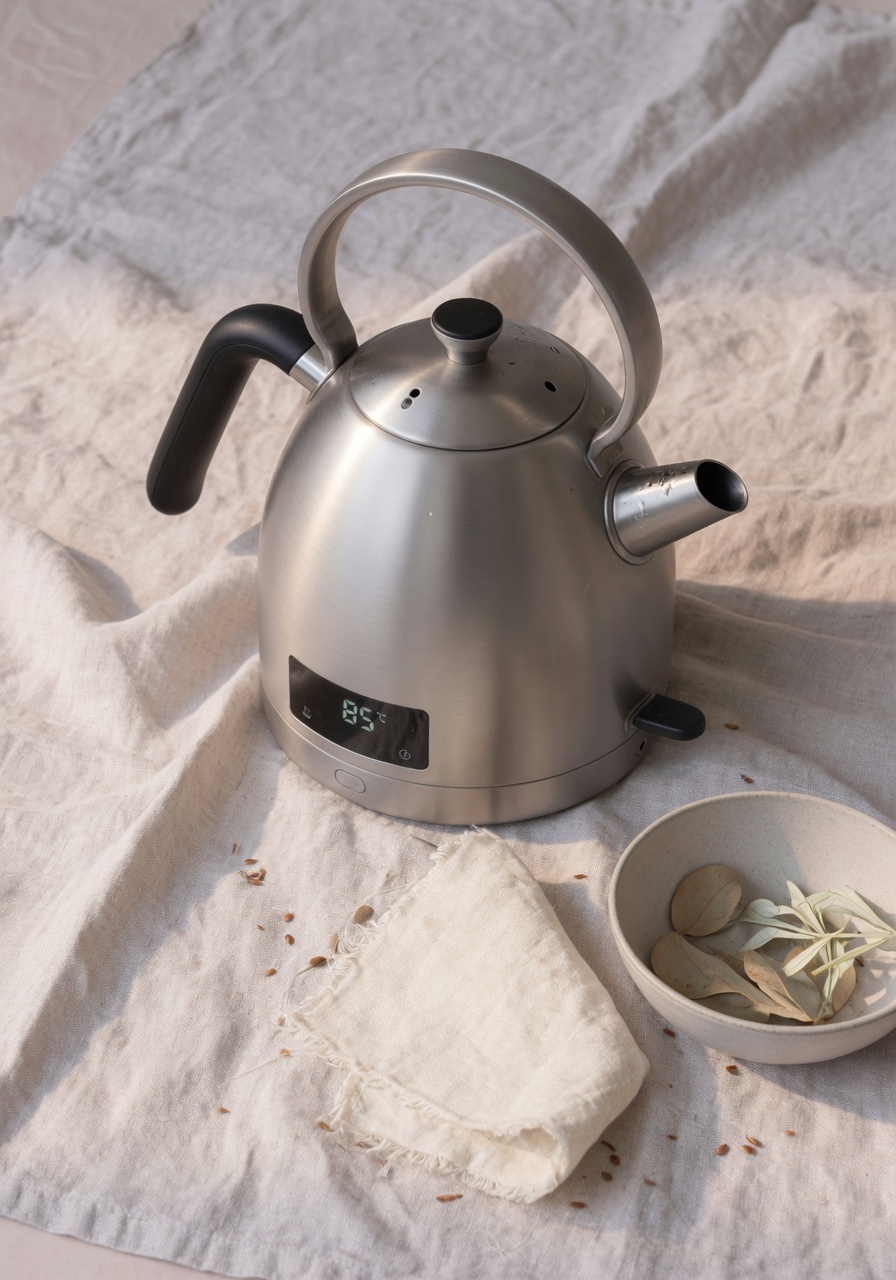
A buyer's note

How to choose a kettle

Match capacity to your session

Gongfu sessions rarely need more than 1L. A larger kettle wastes energy reheating and holds water longer, where it goes flat and de-oxygenated.

Variable temperature is non-negotiable

If you drink green, white, or light oolong, a single-button boil-only kettle will dull every cup. Look for 1°C increments from 40°C to 100°C.

Hold function matters more than speed

A kettle that boils in 90 seconds but cools immediately forces you to re-heat between steeps. A 30-minute hold at temperature is worth more than raw wattage.

Mind the inner material

Stainless 304 or 316 is safest. Avoid plastic linings and unspecified alloys. Glass with a stainless base is excellent for visual feedback and stays neutral.

Spout shape decides pour control

A long, narrow gooseneck pours slow and precise — good for matcha and light greens. A wider spout pours fast and turbulent — better for awakening dark teas and pu-erh.

Consider a stovetop second kettle

Cast iron or clay on induction gives a different mouthfeel to aged and dark teas. Many practitioners keep an electric for daily use and a *tiě hú* for weekend sessions.

Common questions

Asked, answered.

Do I really need a variable-temperature kettle?

If you drink anything other than black tea and dark pu-erh, yes. Greens, whites, yellows, and light oolongs are temperature-sensitive in ways a boil-only kettle can't serve.

Is glass or stainless better?

Both are neutral. Glass shows you the boil and any sediment from your water. Stainless is more durable and quieter. Pick on aesthetics — performance is similar.

What about plastic parts?

Avoid kettles where water touches plastic at temperature. Plastic on the handle or base is fine. Plastic in the spout or chamber is a hard no for us.

How accurate is 'variable temperature' really?

Good kettles hold ±1°C. Cheaper ones drift ±5°C, which matters for a 75°C white tea. We test every model with a calibrated probe before listing.

Can I use a stovetop kettle on induction?

Only if its base is ferromagnetic. Most cast iron *tiě hú* work on induction; pure clay does not. Check the product page — we list compatibility for each item.

Does the kettle change the taste of water?

Stainless and glass are neutral. Cast iron releases trace iron that sweetens dark teas. Clay can soften hard water slightly. The effect is real but subtle.

What water should I put in the kettle?

Soft spring water, 30-90 ppm TDS, is the sweet spot for most teas. Filtered tap is fine if your area is soft. See the water module at tea.school for specifics.

How does this pair with the rest of my setup?

Pair with a gaiwan or *zǐshā* (紫砂) teapot from our [teapots category](https://tea.equipment/category/teapots.html), and a fairness pitcher sized to your kettle's pour.