tea.equipment · sampling channel Encyclopedia · School · Atlas · Pu-erh · Equipment EN · RU · · · FR · ES · AR
tea.equipment Cart (0)

home · catalog

Calor y agua

Hervidores calibrados para las temperaturas que realmente pide el té

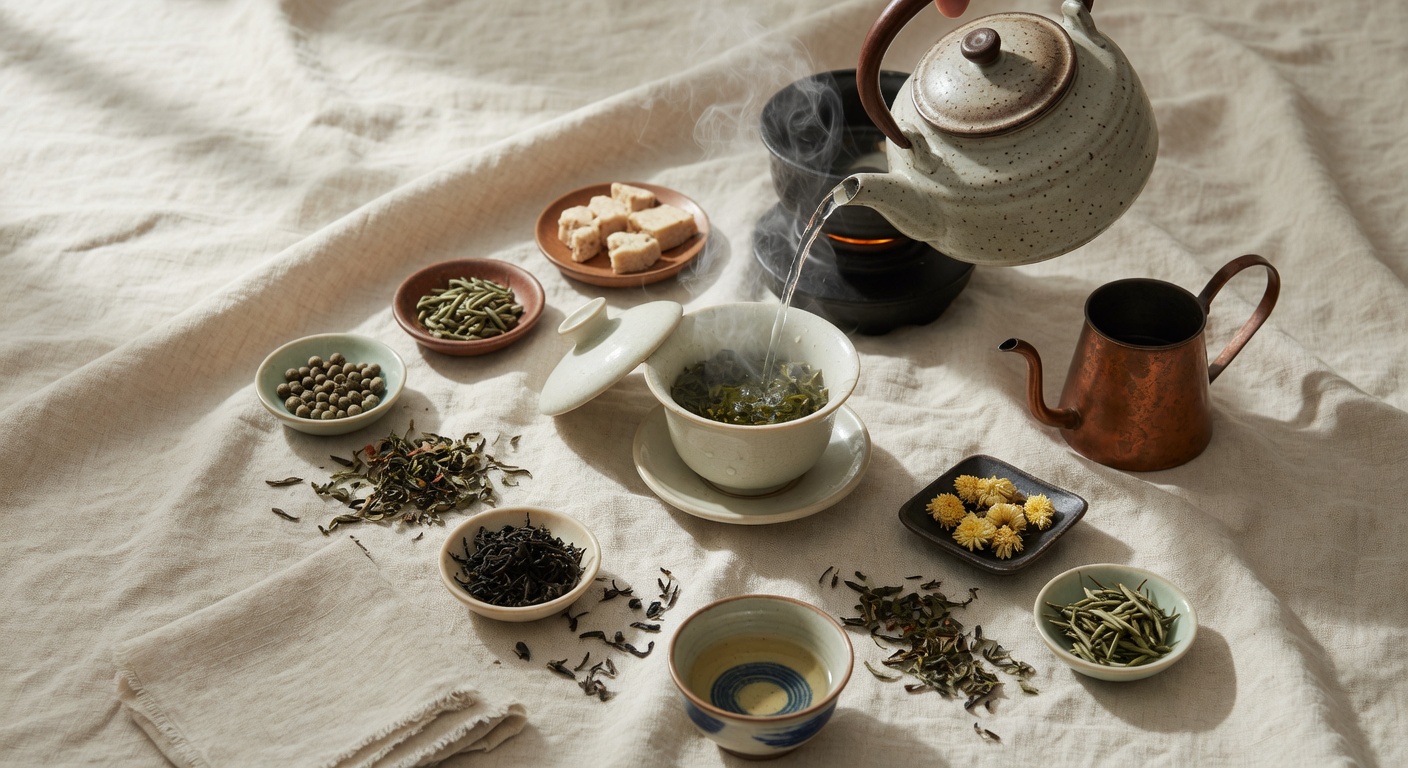
Un hervidor es la mitad silenciosa de cada infusión. La hoja se lleva el mérito, pero es el agua — su temperatura, su movimiento, la velocidad con la que alcanza el hervor — lo que decide si un té verde se percibe dulce o astringente, si un *yán chá* (岩茶) se abre o se cierra. Esta categoría reúne hervidores eléctricos y de estufa diseñados para el té, no para el café.

Calor y agua

Por qué los aficionados al té se obsesionan con los hervidores

El café vive a una sola temperatura. El té, no. Un blanco aguja de plata pide agua alrededor de 75 °C — si se sube, la pelusa del brote se cuece y la taza se vuelve plana. Un oolong Wuyi tostado quiere un hervor fuerte y enérgico para elevar su parte tostada hacia el aroma. Un shēng pu-erh joven se sitúa en algún punto intermedio, y un shóu envejecido exige el agua más alta y agresiva que puedas darle. Una hoja, una temperatura es la regla que el hervidor debe cumplir.

Por eso un hervidor para té está construido de forma diferente a un cuello de cisne para café. Las prioridades, en orden: temperatura variable precisa, una función de mantenimiento para que la segunda infusión comience con el mismo calor que la primera, bajo nivel de ruido para que el hervidor desaparezca bajo la conversación, un vertido controlable sin ser teatral y materiales que no transmitan sabores al agua. El vidrio muestra lo que sucede. El acero inoxidable es honesto y silencioso. El hierro fundido y la arcilla pertenecen a una estufa, sobre carbón o inducción, donde la lenta subida hasta el hervor es parte del ritual.

El agua en sí importa tanto como el hervidor. El agua blanda con baja TDS permite que los compuestos aromáticos florezcan; el agua dura aplana los tés verdes y apaga los oolongs ligeros. Si tu agua del grifo supera las 150 ppm, un simple filtro en línea o agua mineral embotellada hará más por tu infusión que cualquier nuevo gaiwan. Nuestros colegas en tea.school lo tratan en su módulo sobre el agua — vale la pena la hora si alguna vez te has preguntado por qué un té sabe distinto en casa de un amigo.

En cuanto a tecnología, los hervidores no han cambiado mucho desde los años 90 — lo que ha cambiado es el firmware. Los hervidores modernos con temperatura variable mantienen ±1 °C, recuerdan ajustes predefinidos para cada estilo de té y despiertan en silencio. Los hervidores de estufa, en cambio, han tomado la dirección contraria: tiě hú (鉄壶) artesanales de forjadores japoneses y chinos, apreciados por el hierro que liberan en el agua, endulzando el cuerpo de los tés oscuros de una manera difícil de imitar eléctricamente. Ambos tienen su lugar. Cuál pertenece a tu mesa depende de cuánto del ceremonial quieras que la máquina maneje por ti.

Los hervidores de esta temporada

Una lista breve — solo vendemos lo que pondríamos en nuestra propia mesa de infusiones. Cada uno ha sido probado con todas las categorías de té que ofrecemos.

A buyer's note

How to choose a kettle

Adapta la capacidad a tu sesión

Gongfu sessions rarely need more than 1L. A larger kettle wastes energy reheating and holds water longer, where it goes flat and de-oxygenated.

La temperatura variable es innegociable

If you drink green, white, or light oolong, a single-button boil-only kettle will dull every cup. Look for 1°C increments from 40°C to 100°C.

La función de mantenimiento importa más que la rapidez

A kettle that boils in 90 seconds but cools immediately forces you to re-heat between steeps. A 30-minute hold at temperature is worth more than raw wattage.

Presta atención al material interior

Stainless 304 or 316 is safest. Avoid plastic linings and unspecified alloys. Glass with a stainless base is excellent for visual feedback and stays neutral.

La forma del pico determina el control del vertido

A long, narrow gooseneck pours slow and precise — good for matcha and light greens. A wider spout pours fast and turbulent — better for awakening dark teas and pu-erh.

Considera un segundo hervidor de estufa

Cast iron or clay on induction gives a different mouthfeel to aged and dark teas. Many practitioners keep an electric for daily use and a *tiě hú* for weekend sessions.

Common questions

Asked, answered.

Do I really need a variable-temperature kettle?

If you drink anything other than black tea and dark pu-erh, yes. Greens, whites, yellows, and light oolongs are temperature-sensitive in ways a boil-only kettle can't serve.

Is glass or stainless better?

Both are neutral. Glass shows you the boil and any sediment from your water. Stainless is more durable and quieter. Pick on aesthetics — performance is similar.

What about plastic parts?

Avoid kettles where water touches plastic at temperature. Plastic on the handle or base is fine. Plastic in the spout or chamber is a hard no for us.

How accurate is 'variable temperature' really?

Good kettles hold ±1°C. Cheaper ones drift ±5°C, which matters for a 75°C white tea. We test every model with a calibrated probe before listing.

Can I use a stovetop kettle on induction?

Only if its base is ferromagnetic. Most cast iron *tiě hú* work on induction; pure clay does not. Check the product page — we list compatibility for each item.

Does the kettle change the taste of water?

Stainless and glass are neutral. Cast iron releases trace iron that sweetens dark teas. Clay can soften hard water slightly. The effect is real but subtle.

What water should I put in the kettle?

Soft spring water, 30-90 ppm TDS, is the sweet spot for most teas. Filtered tap is fine if your area is soft. See the water module at tea.school for specifics.

How does this pair with the rest of my setup?

Pair with a gaiwan or *zǐshā* (紫砂) teapot from our [teapots category](https://tea.equipment/category/teapots.html), and a fairness pitcher sized to your kettle's pour.