Seasoning, the first weeks
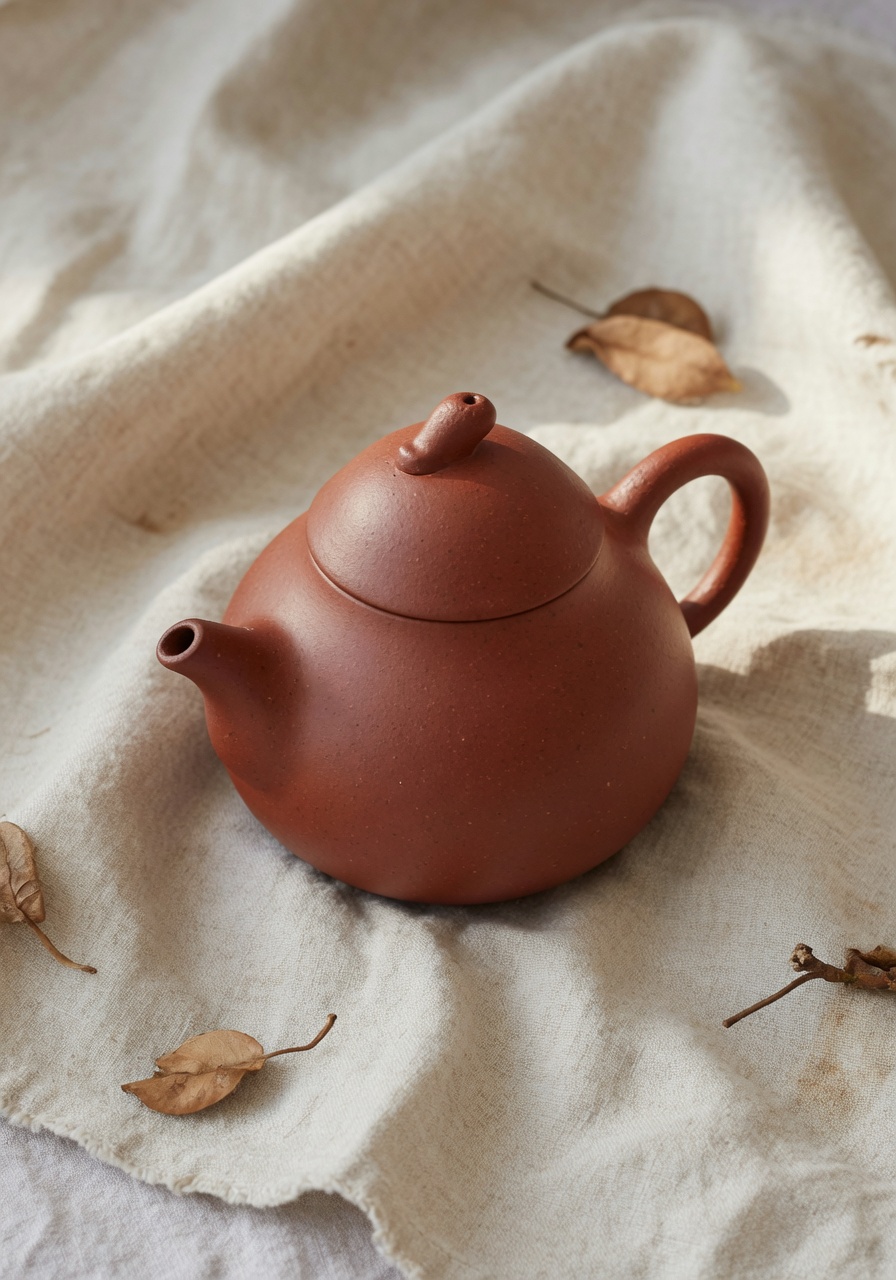
Unglazed clay — Yixing *zǐshā*, Jianshui purple clay — needs opening before its first real session. Simmer in clean water with a pinch of the tea you are dedicating the piece to, roughly 30 minutes, then air-dry on a cotton cloth for a day. Jianshui in particular absorbs oils more slowly than Yixing, so give it several weeks of dedicated brewing — ten to fifteen sessions — before judging the rounder mouthfeel it is known for. Porcelain and Ru-yao glazed ware need no seasoning beyond a hot-water rinse before first use, since the glaze itself is inert.
The daily rinse, and why no soap
Unglazed clay pots — Yixing and Jianshui — should only ever see hot water, wiped with a cotton cloth, stored lid-off. Soap strips the patina a clay pot spends years building, and any residue left in a porous wall carries into the next brew. Glazed ware is more forgiving — porcelain gaiwans can take a soft hand-wash on overglaze decoration, and underglaze blue-and-white is dishwasher-safe — but a Ru-yao crackle gaiwan should still be rinsed hot-water-only, since the crackle is designed to stain with tea liquor over time and scrubbing fights the exact patina the glaze is built to develop.
Storing a pot between sessions
Empty all leaves immediately after a session, rinse with hot water, and invert the pot lid-off on a clean cloth so no trapped moisture sours the clay while it dries. Never seal a still-warm pot — the trapped steam is what causes a musty smell to set into unglazed clay over weeks of storage. This matters most for pots that sit unused between seasonal rotations, since a badly stored pot can lose months of built-up patina to a single mouldy week.
Reading wear before it becomes damage
A well-fired clay pot rings clearly when the lid is tapped against the spout — start listening for that tone early, so you notice if it ever goes dull, which usually signals a hairline crack forming along a seam. On porcelain, check the lid seat regularly; a loose lid that starts to wobble is often the first sign the piece has taken a small knock that has not yet become a visible chip.
When a lid breaks — what we can and cannot do
We do not run an automated lid-matching database yet, and we will not pretend a broken pot is unfixable in the meantime. If a lid cracks, chips, or goes missing, write to us with photos of the piece, its base and lid stamps if it has them, and roughly when and where you bought it — [email protected]. If the piece came from a workshop we still buy from, we will ask the maker directly whether a matching lid exists. If it does not, kintsugi — gold-seam lacquer repair — is often the more honest answer than a replacement, and we can point you toward it once we know what we are looking at. This is a manual, person-to-person process today, not a form — we would rather tell you that plainly than build a page that promises a database we have not shipped.