Why measurement is the hidden ingredient
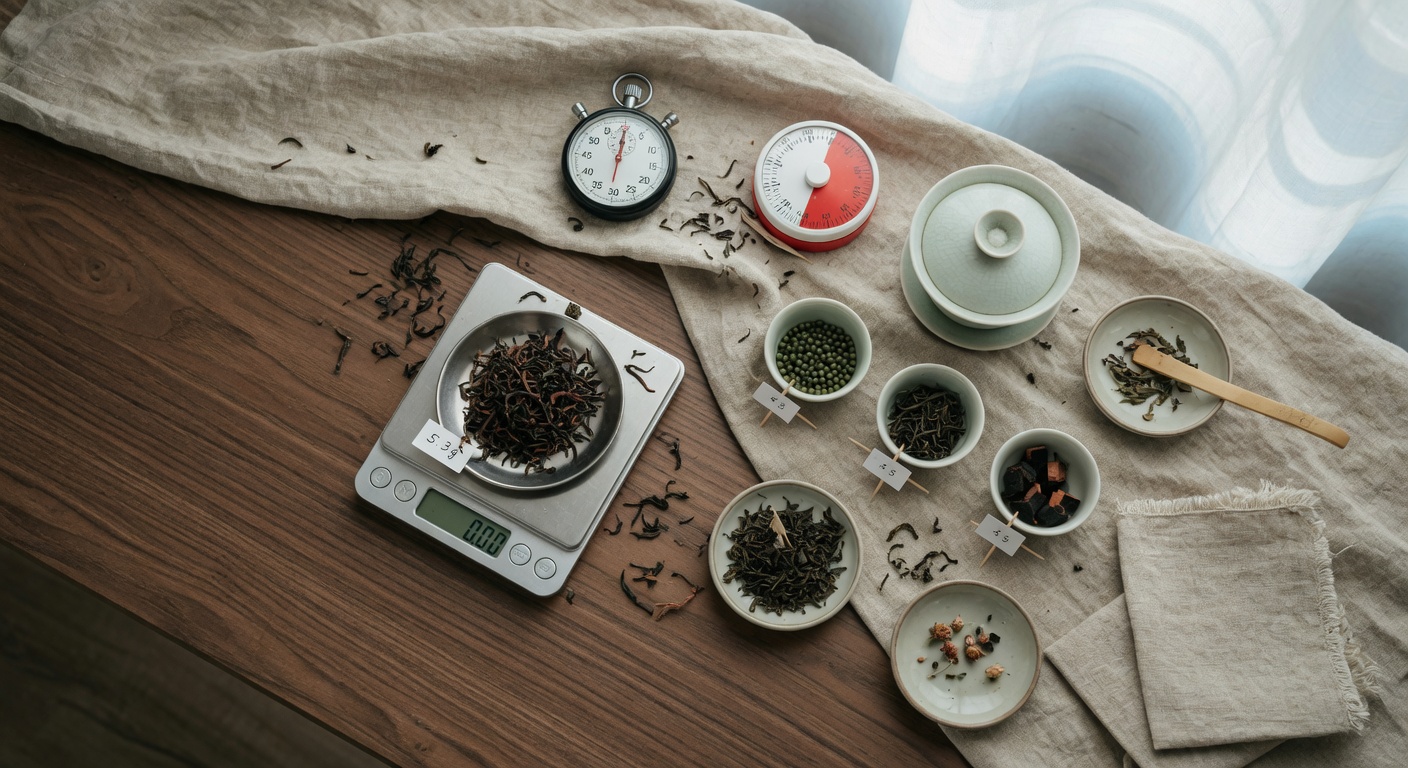
Most brewing failures aren’t about water or leaf — they’re about quantities the brewer never actually saw. Eyeballing 5g of curled dancong (单丛) versus 5g of compressed shou pǔ’ěr (熟普洱) gives wildly different vessels of tea, even though both look like a small pile in the hand. A scale ends the argument. A timer ends the second argument, the one about whether the third steep was really fifteen seconds or closer to forty.
The instruments in this category are not romantic. They are the opposite of a hand-thrown Yìxīng (宜兴) pot. But they are what makes the pot honest. Once you record that 7.2g of a specific Wuyi rock oolong, in a 110ml gaiwan, at 96°C, with a 6/8/12/20 second ladder, produces the cup you love — you can reproduce that cup next Tuesday. Without measurement, every session is a first session.
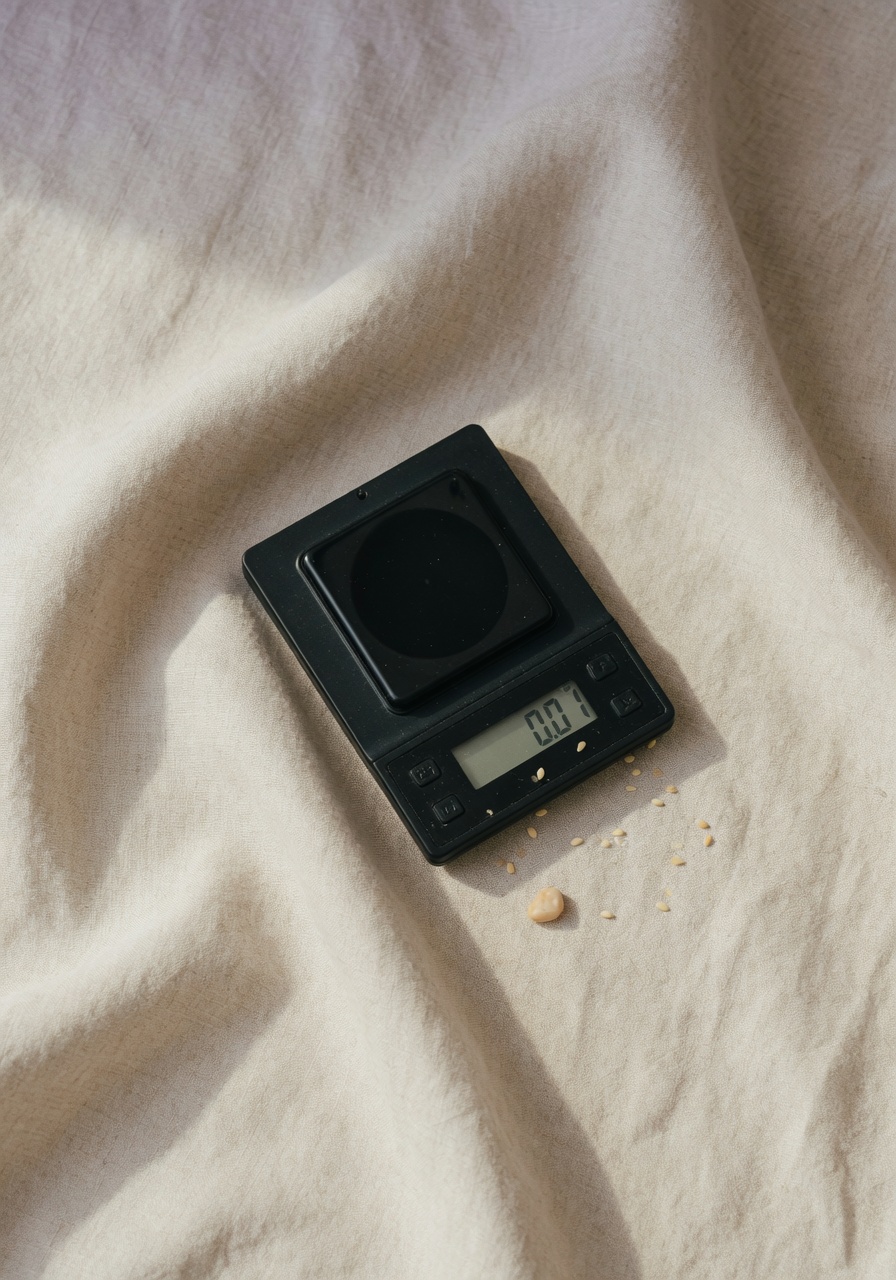
There are two thresholds worth knowing. 0.1g resolution is sufficient for most leaf weighing, since 0.1g of dry tea is roughly two or three small leaves and well below the sensitivity of the palate. 0.01g resolution becomes useful when you are dosing small samples (under 3g), comparing vendors blind, or working with powdered teas like mǒchá (抹茶) where 0.3g shifts the foam noticeably. Most home brewers do not need 0.01g. Most cataloguers, sommeliers, and competition brewers do.
Timers split similarly. A loud kitchen timer breaks the room. A silent vibrating timer, or a phone app set to haptic-only, lets the table stay quiet — which matters more than people admit at a gongfu session with four guests. We list both, with a bias toward the silent ones.
For the theory behind dose-to-vessel ratios, the gongfu fundamentals course on tea.school walks through the math with worked examples. For the broader case on calibrated tasting, see the sensory tools at tea.degree.
What we stock this season
A short, opinionated shelf. We only carry instruments we use ourselves on the tasting bench — no novelty scales, no beeping kitchen timers.