tea.equipment · sampling channel Encyclopedia · School · Atlas · Pu-erh · Equipment EN · RU · · · FR · ES · AR
tea.equipment Cart (0)

home · catalog

测量

秤与计时器 — 可重复泡茶的静谧器具

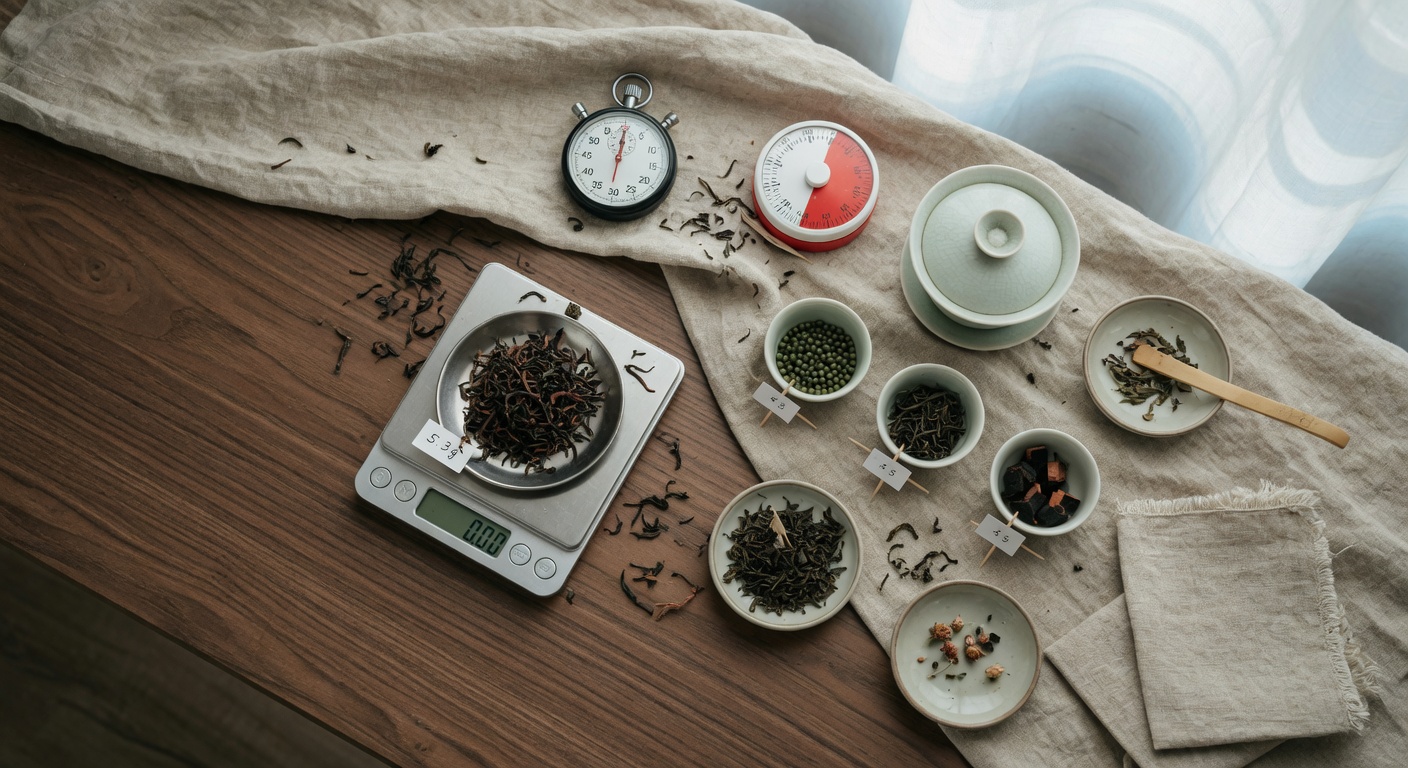
工夫茶靠公克与秒数。0.01 克的秤能告诉你,昨天的茶汤为何精彩,今天却平淡无奇。静音计时器让桌面保持宁静。这类别规模不大、技术性强,却绝对是支撑一切的基石。

测量

为何测量是看不见的关键配料

大多数泡茶失败的原因,不在水或茶叶 — 在于茶人从未真正看清的份量。凭眼力估量 5克卷曲的 dancong(单丛)对比 5克压制的 shou pǔ’ěr(熟普洱),即便手中看来都是一小撮,泡开后占据的茶器容量却截然不同。一把秤终结了所有争论。计时器则终结第二场 — 第三泡究竟是十五秒,还是接近四十秒的争辩。

这类工具不讲浪漫。它们与手拉坯的 Yìxīng(宜兴)壶恰恰相反,却让那把壶变得诚实。一旦你记录下:某款武夷岩茶取 7.2克,以 110毫升盖碗、96°C水温、6/8/12/20 秒的阶梯浸泡,便能冲出你爱的那一杯 — 下周二就可以一模一样地重现。没有计量,每一泡都像第一次。

有两个值得认识的门槛。0.1克分辨率足以应付多数茶叶秤量,因为 0.1克的干茶大约是两到三片小茶叶,远低于味蕾的敏感度。0.01克分辨率则在秤取少量样本(低于3克)、盲测比较不同供应商,或处理 mǒchá(抹茶)一类粉末茶时派上用场 — 0.3克的差距就会明显改变泡沫。多数居家茶人不需要 0.01克;多半的建档者、侍茶师和比赛选手则需要。

计时器也同样分流。一个大声作响的厨房计时器会破坏空间。寂静的震动计时器,或设为纯触觉回馈的手机应用,能让桌面保持宁静 — 这在四个人共席的工夫茶会上,比大家愿意承认的更重要。我们两者皆有收录,但偏重无声的款式。

关于投茶量与茶器比例背后的理论,tea.school 上的工夫茶基础课程 以实例解说其中的运算。想了解校准品鉴的更广视角,请参阅 tea.degree 的感官工具。

本季选品

精而少的选品。我们只陈列自己在品评台上使用的工具 — 没有花俏的秤,没有哔哔作响的厨房计时器。

A buyer's note

Choosing a scale and timer

分辨率:0.1克对多数人已足够

0.1g handles every gongfu session under 12g of leaf. Step up to 0.01g only if you weigh sub-3g samples, dose *mǒchá*, or run comparative cuppings.

秤盘尺寸比你以为的更关键

A tiny jewelry-scale pan can't hold a *cha he* (茶荷). Look for at least 60mm across, or a flat top that accepts a tared dish.

蒸气下的归零稳定性

Cheap scales drift when warm air rises off the kettle. Test by taring, waiting thirty seconds near a boiling kettle, and checking zero. Drift over 0.05g is disqualifying.

静音计时器,偏好震动提示

A vibrating wrist or pocket timer keeps the room quiet. If using a phone, lock it to do-not-disturb with haptics on — beeping breaks the pour rhythm.

正数计时,而不仅是倒数

A stopwatch that counts up lets you see actual infusion time after the fact, which matters when you forgot to start it. Countdown alone hides the data.

电池与校准砝码

Pick a scale that uses common AAA cells, not a sealed lithium pack. A 50g or 100g calibration weight should ship with it — if not, budget one separately.

Common questions

Asked, answered.

Do I really need a 0.01g scale for gongfu?

No. 0.1g resolution covers nearly every session. 0.01g is for sub-3g samples, *mǒchá* dosing, or blind comparative tastings where small differences are the whole point.

Will steam from the kettle damage the scale?

Brief exposure is fine. Sustained steam can drift the load cell and corrode contacts. Keep the scale on a dry surface a hand's width from the kettle spout.

What's a good baseline ratio to start measuring against?

For gongfu, 1g of leaf per 15ml of vessel is a sane starting point. Adjust down for very curled oolongs, up for compressed dark teas. The [encyclopedia on thetea.app](https://thetea.app) lists ratios by style.

Can I just use my phone as a timer?

Yes, with do-not-disturb and haptic alerts. Audible beeps disrupt a shared session. A dedicated silent timer is nicer but not required.

How accurate are these scales, really?

Properly calibrated, the 0.01g unit reads within ±0.02g across its working range. Check monthly with the calibration weight; recalibrate if drift exceeds 0.05g.

What about weighing the gaiwan with leaf inside?

Workable, but tare the empty gaiwan first, then add leaf. Hot vessels add convection error, so weigh the gaiwan at room temperature.

Do competition brewers measure to 0.01g?

Yes, most do, especially in dose-controlled formats. See [tea.events](https://tea.events) for upcoming cuppings and competition formats where this precision is standard.