tea.equipment · sampling channel Encyclopedia · School · Atlas · Pu-erh · Equipment EN · RU · · · FR · ES · AR
tea.equipment Match my tea →

home · catalog

أدوات التحضير

الأدوات الصغيرة التي تجعل مائدة الغونغفو تعمل

إن الغايوان والإبريق يكفيان لتحضير الشاي، لكن المائدة من حولهما هي ما يحوّل التحضير إلى جلسة. أباريق التعديل، الأعواد، المصافي، صواني الأكواب، قطع القماش — كل أداة صغيرة تحل مشكلة لا تلاحظها إلا عند غيابها.

أدوات التحضير

لماذا درج الملحقات أهم من إبريق الشاي

معظم المبتدئين ينفقون ميزانيتهم الأولى على إبريق وغايوان، ثم يكتشفون أن الجلسة لا تزال غير مريحة. يتقطر الشاي من جانب الغايوان، تسد الأوراق الفوهة، يصب الإبريق بشكل غير متساوٍ، وتغرق الأكواب في بركة. الملحقات هي الحل لكل هذه الاحتكاكات الصغيرة. إنها ليست للزينة — إنها الفرق بين جلسة تنساب بسلاسة وأخرى تقاومك.

إن chá hǎi (茶海)، والتي تعني حرفياً ‘بحر الشاي’، هي الأهم بينها. يستقبل إبريق التعديل كامل السكب من وعاء التخمير بحيث تتذوق كل كأس على المائدة الطعم نفسه — الكأس الأولى ليست أقوى من الأخيرة. في تقليد تشاوتشو، كان الـ cha hai يُتجاوز تاريخياً، حيث يصب المضيف مباشرة في حلقة ضيقة من الأكواب، ولكن في ممارسة الغونغفو الحديثة عبر قوانغدونغ وفوجيان، أصبح هذا الإبريق معياراً. الزجاج الآن هو المادة السائدة لأنه يتيح لك قراءة السائل: يجب أن يتوهج شاي وويي يان تشا بلون كهرماني برتقالي، ويكون الشينغ الصغير ذهبياً باهتاً بحواف خضراء، والشو المعتق بلون القهوة الداكنة مع لمحات حمراء.

أعواد الشاي (chá zhēn 茶针) تحل مشكلة منفصلة. الشاي المضغوط — كعكات البو إيره، قوالب الشاي الأبيض، سلال ليو باو — بحاجة إلى فصله على طول طبقاته الطبيعية، لا سحقه. العود الجيد رفيع بما يكفي لينزلق بين طبقات الأوراق، قوي بما يكفي كي لا ينثني، ومصنوع من خشب لا يتشظى داخل شايك. الكرز، خشب البقس، والبامبو المعتق هي الخيارات التقليدية.

المصافي، الأقمشة، وصواني الأكواب تكمل المجموعة. مصفاة شبكية ناعمة توضع فوق الـ cha hai تلتقط الأوراق المكسورة والغبار، وهذا مهم خصوصاً للشاي الأحمر (هونغ تشا) والبو إيره المكسور الدرجة. الأقمشة — عادة قطن غير مبيض أو قنب — تمسح التكثف عن بطون الأباريق وحواف الأكواب بين السكبات. صواني الأكواب (bēi tuō 杯托) تبقي الأكواب المبللة بعيداً عن قماش المائدة وتعطي كل ضيف مكاناً محدداً على المائدة.

للاطلاع على التصميم الاحتفالي الكامل، راجع دليل إعداد الغونغفو على tea.school والتاريخ الأعمق لـ cha hai على thetea.app.

ملحقات هذا الموسم

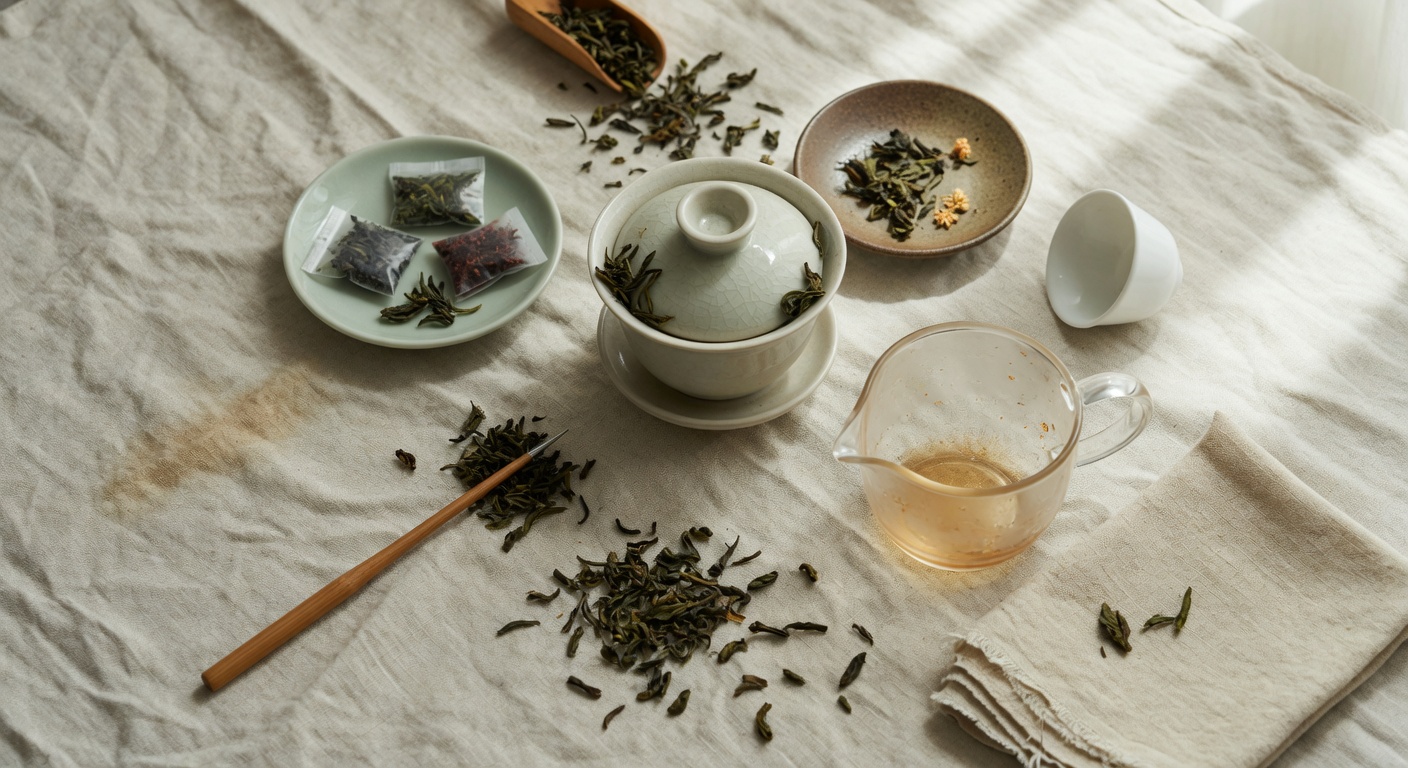
أداتان صغيرتان نستخدمهما على موائدنا كل يوم — إبريق زجاجي شفاف وعود خشب الكرز المصنوع يدوياً.

Automated translation — native review pending.

A buyer's note

Choosing accessories that last

طابق إبريق التعديل مع الإبريق

A cha hai should hold 1.2× to 1.5× the volume of your brewing vessel. A 100ml gaiwan pairs naturally with a 150ml pitcher — room for the pour without overflow.

الزجاج أولاً، ثم الطين

Start with a clear glass cha hai so you can read every liquor. Add unglazed clay or porcelain pitchers later, once you know which teas you brew most and want to flatter.

اختر عود الشاي تبعاً لنوع الشاي

Cherry and boxwood for pu-erh cakes and dense bricks. Bamboo for loose compressed whites. Avoid metal picks — they bruise leaves and scratch lacquered tea trays.

افحص الفوهة، لا الجسم

A cha hai's whole job is a clean pour. Test it with water before you buy: it should cut off sharply without dribbling down the lip.

اغسل بالماء فقط

Soap leaves residue that crosses into the next session. Rinse cha hai and strainers with hot water, dry with a linen cloth, and let everything air on a slatted tray.

ابنِ المجموعة ببطء

One pitcher, one pick, one strainer, one cloth — this is enough for a year of practice. Cup trays and tea pets come later, once your table tells you what it needs.

Common questions

Asked, answered.

Do I really need a cha hai if I'm brewing for one person?

Yes — even solo, it stabilises the steep. Without one, the leaves keep extracting in the gaiwan between sips and the last mouthful turns bitter.

Glass or porcelain pitcher?

Glass for learning and for showing colour. Porcelain or celadon once you have a tea you brew weekly and want to soften its edges. Most practitioners own both.

How do I clean a glass cha hai that has stained?

A paste of baking soda and warm water, left to sit for ten minutes, lifts most tea film. Avoid scouring pads — micro-scratches hold future stains.

What's the difference between a tea pick and a tea knife?

A pick is thin and round, made to slide between leaf layers. A knife is flat and wedge-shaped, made to split a cake. Most pu-erh drinkers own both — see the pu-erh prying guide on puerh.app.

Can I use a coffee strainer for tea?

Technically yes, but the mesh is usually too coarse for hong cha dust and too metallic in taste. A dedicated tea strainer in stainless or bamboo costs little and changes the cup.

Why are some cha hai shaped without a handle?

Handleless pitchers (the *gōng dào bēi* style) cool faster and pour with two hands — a slower, more deliberate gesture that suits formal sessions.

Where do I learn the full table layout?

The gongfu setup module on tea.school walks through every position, and tea.events runs in-person ceremony workshops in several cities.