tea.equipment · sampling channel Encyclopedia · School · Atlas · Pu-erh · Equipment EN · RU · · · FR · ES · AR
tea.equipment Cart (0)

home · catalog

泡茶配件

让工夫茶桌顺畅运作的小工具

盖碗和水壶可以泡茶,但环绕它们的桌面才让冲泡变成了一场茶席。茶海、茶针、滤网、杯托、亚麻布 — 每一件小物都解决了一个缺失时你才会发觉的问题。

泡茶配件

为何配件抽屉比茶壶更重要

多数初学者将第一笔预算花在茶壶与盖碗上,然后发现茶席依然笨拙。茶水顺着盖碗侧边滴落,茶叶堵塞壶嘴,茶海倒出不均,杯子搁在一滩水里。配件正是所有这些小摩擦的解答。它们并非装饰品 — 它们决定了茶席是流畅,还是处处与你作对。

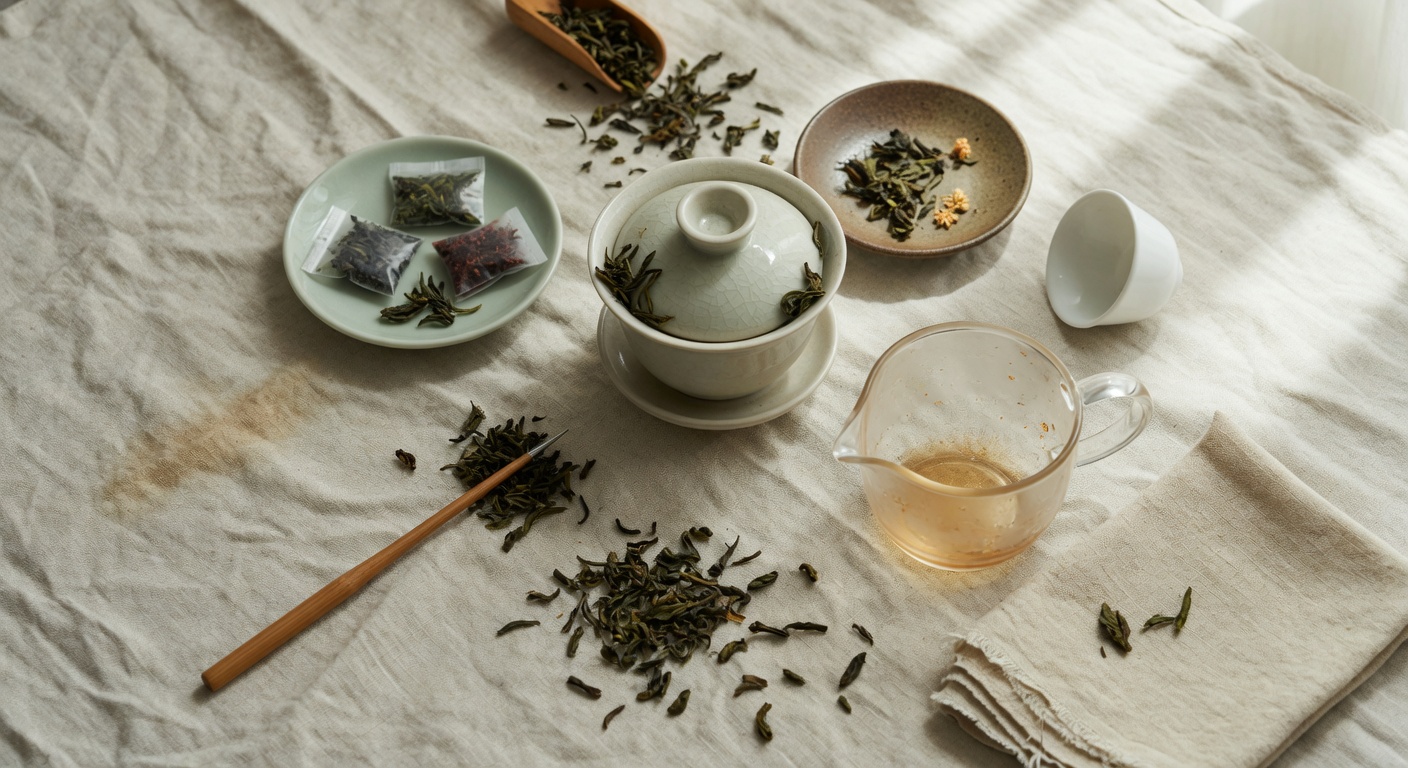
chá hǎi(茶海),字面意义为「茶之海」,是其中最重要的。茶海承接泡茶器倾出的全部茶汤,让席间每一杯滋味均匀 — 第一杯不比最后一杯浓烈。在潮州传统里,茶海过去常被省略,由主人直接分倒入紧密排列的一圈茶杯,但在广东与福建的现代工夫茶实践中,它已成为标准配备。玻璃目前是主要材质,因为它能让您读懂茶汤:武夷岩茶应泛出琥珀橘光,年轻的生普应呈带绿边的淡金色,陈年熟普的色泽应如深色咖啡般点缀红晕。

茶针(chá zhēn 茶针)解决另一个问题。压制茶 — 普洱茶饼、白茶砖、六堡茶篓 — 需要顺着自然层理剥开,而非压碎。一支好的茶针要够薄,能滑入叶层之间;够坚固,不弯折;并以不会崩裂落屑的木料制成。樱桃木、黄杨木与老竹是传统选择。

滤网、亚麻布和杯托完备了整套配件。置于茶海上方的细目滤网能拦截碎叶与尘末,对红茶与碎级普洱尤为重要。亚麻布 — 通常是未经漂白的棉或麻 — 在每泡之间擦拭壶腹与杯缘的凝水。杯托(bēi tuō 杯托)让湿杯子远离壁纸,并为每位宾客在席间标定一处位置。

完整的仪式布局,请参阅 tea.school 上的工夫茶设置指南,以及 thetea.app 上关于茶海更深入的历史。

本季配件

我们每天在自用茶桌上使用的两件小物 — 一只透明玻璃茶海和一支手工塑形的樱桃木茶针。

A buyer's note

Choosing accessories that last

让茶海与茶壶相配

A cha hai should hold 1.2× to 1.5× the volume of your brewing vessel. A 100ml gaiwan pairs naturally with a 150ml pitcher — room for the pour without overflow.

先选玻璃,再考虑陶制

Start with a clear glass cha hai so you can read every liquor. Add unglazed clay or porcelain pitchers later, once you know which teas you brew most and want to flatter.

依照茶品选择茶针

Cherry and boxwood for pu-erh cakes and dense bricks. Bamboo for loose compressed whites. Avoid metal picks — they bruise leaves and scratch lacquered tea trays.

检查壶嘴,而非壶身

A cha hai's whole job is a clean pour. Test it with water before you buy: it should cut off sharply without dribbling down the lip.

只用清水清洗

Soap leaves residue that crosses into the next session. Rinse cha hai and strainers with hot water, dry with a linen cloth, and let everything air on a slatted tray.

慢慢添置整套茶具

One pitcher, one pick, one strainer, one cloth — this is enough for a year of practice. Cup trays and tea pets come later, once your table tells you what it needs.

Common questions

Asked, answered.

Do I really need a cha hai if I'm brewing for one person?

Yes — even solo, it stabilises the steep. Without one, the leaves keep extracting in the gaiwan between sips and the last mouthful turns bitter.

Glass or porcelain pitcher?

Glass for learning and for showing colour. Porcelain or celadon once you have a tea you brew weekly and want to soften its edges. Most practitioners own both.

How do I clean a glass cha hai that has stained?

A paste of baking soda and warm water, left to sit for ten minutes, lifts most tea film. Avoid scouring pads — micro-scratches hold future stains.

What's the difference between a tea pick and a tea knife?

A pick is thin and round, made to slide between leaf layers. A knife is flat and wedge-shaped, made to split a cake. Most pu-erh drinkers own both — see the pu-erh prying guide on [puerh.app](https://puerh.app).

Can I use a coffee strainer for tea?

Technically yes, but the mesh is usually too coarse for hong cha dust and too metallic in taste. A dedicated tea strainer in stainless or bamboo costs little and changes the cup.

Why are some cha hai shaped without a handle?

Handleless pitchers (the *gōng dào bēi* style) cool faster and pour with two hands — a slower, more deliberate gesture that suits formal sessions.

Where do I learn the full table layout?

The gongfu setup module on [tea.school](https://tea.school) walks through every position, and [tea.events](https://tea.events) runs in-person ceremony workshops in several cities.